
The weather has deteriorated even more, but the captain and the expedition crew want us to have one more landing before we leave South Georgia Island. We turn south and head for the southern tip of the island where Gold Harbor offers shelter and a sea lion colony.
The skies are dark and ominous, but the winds are slight and the sea is calm. Progress is very slow. The ocean around Gold Harbour is full of icebergs. It is a wonderful if slightly unsettling sight

The captain has to negotiate our path with extreme care.
The icebergs are starkly beautiful against the dark grey sky, and at times it seems this world is just black and white with all the colour leached out of it

I am so busy taking photographs that I fail to notice how close the icebergs are getting. They seem to be closing in on us.
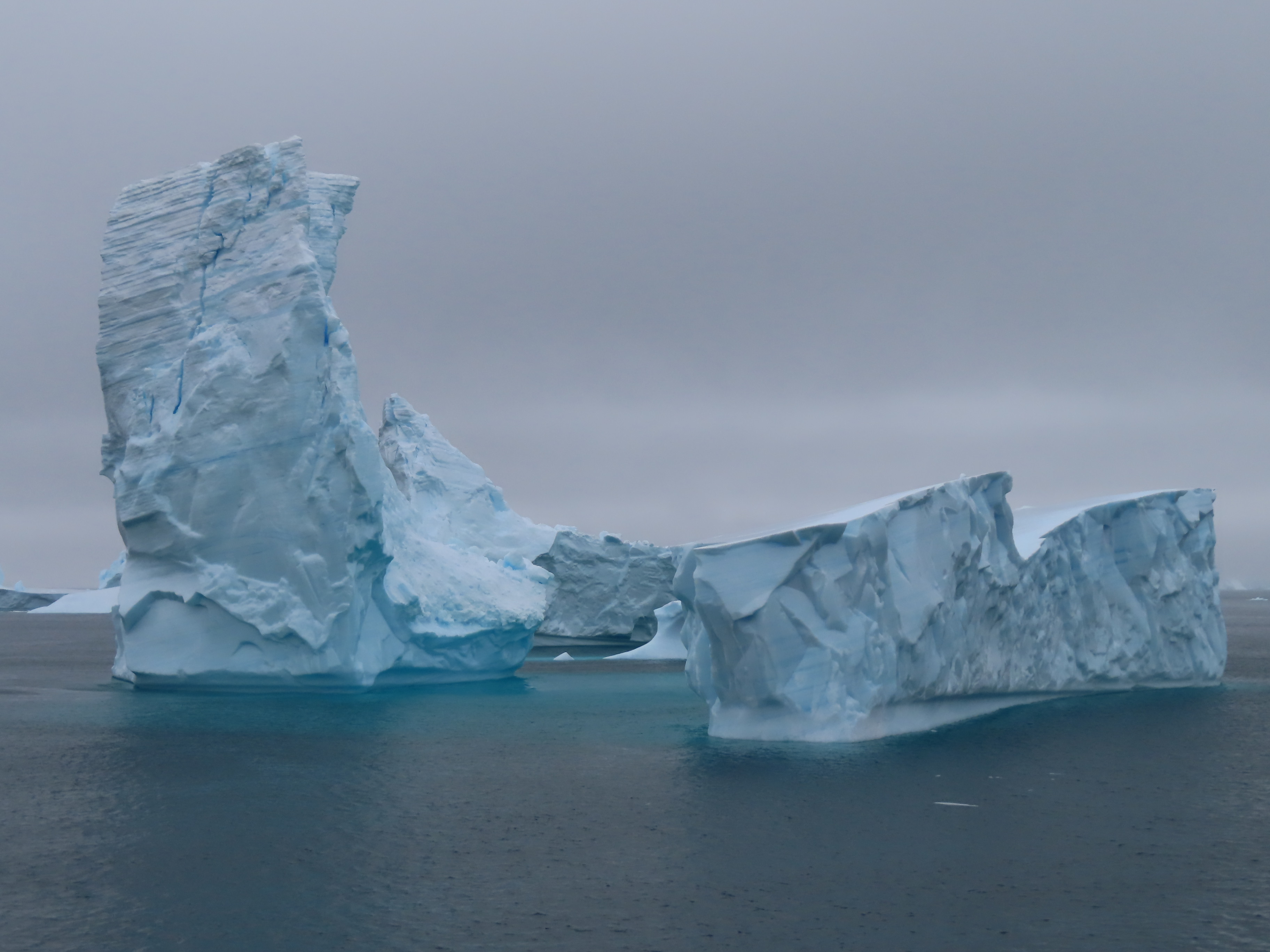
The atmosphere on board is getting tense. There are a lot of anxious people. I try and tell myself I am not one of them, but I am not totally convinced
And then as the captain carefully rounds one more iceberg, people start applauding. Gold Harbour has finally come into view

Colour has returned to the scenery and it is quite beautiful
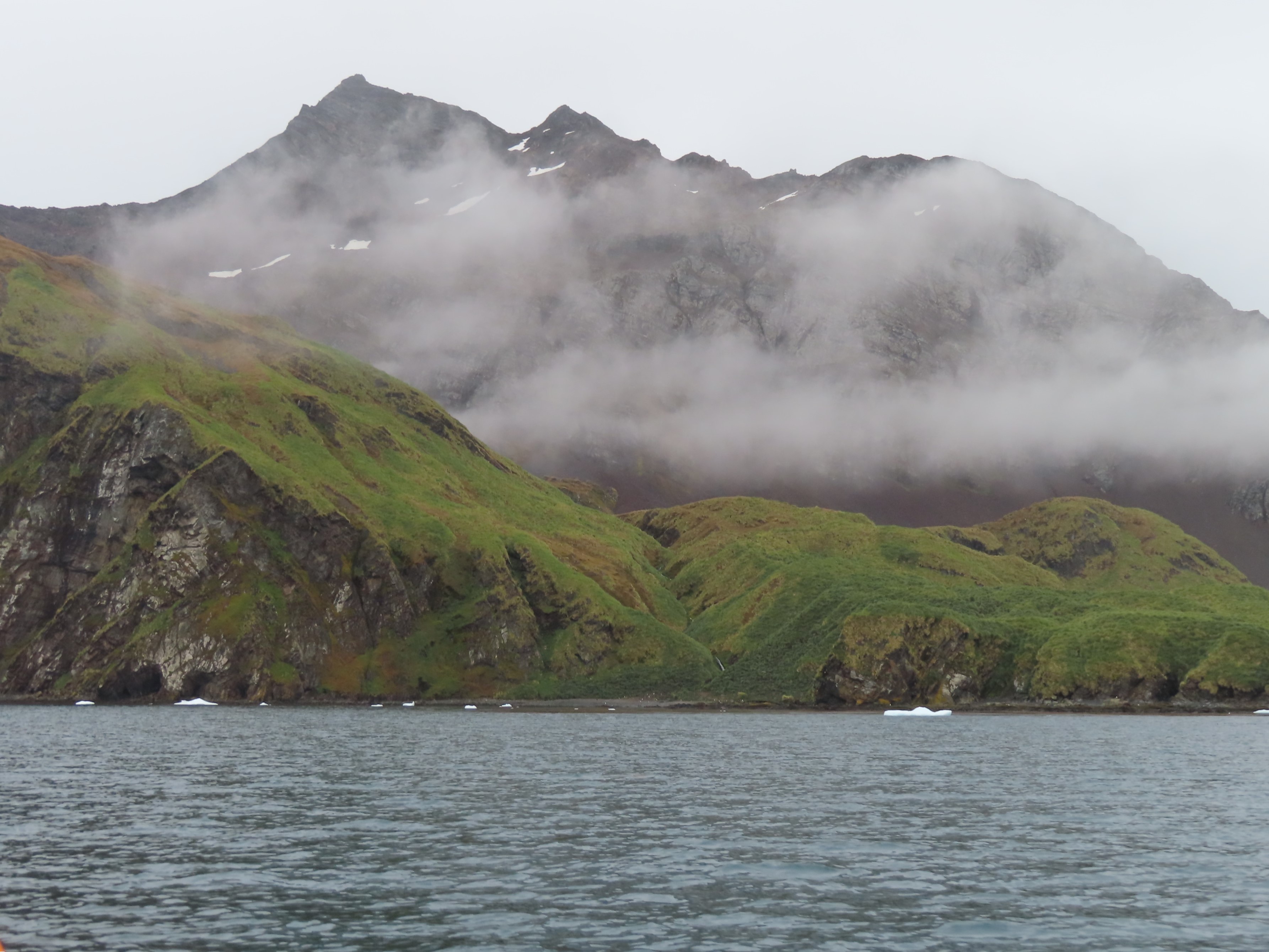
At the end of the bay there is a narrow beach with a hillside behind which is covered in tussock grass. This is where the colony of seals have staked out their home.
As usual, a zodiac with part of the expedition crew go ashore first to scout it out for us. It is not long before they report back that the landing will have to be rather limited. We will be asked to stay on the beach as the tussock grass is packed with seals who won’t take kindly to being disturbed. And we won’t be able to wander the beach as there are a pair of elephant seals resting at one end and a giant petrel sitting on a nest at the other. Consequently we will be delivered to the beach in small groups, and only one group will be allowed on the beach at a time.
My group is the last to make its way to the beach. We get another view of just how careful the captain had to be navigating his way through the icebergs
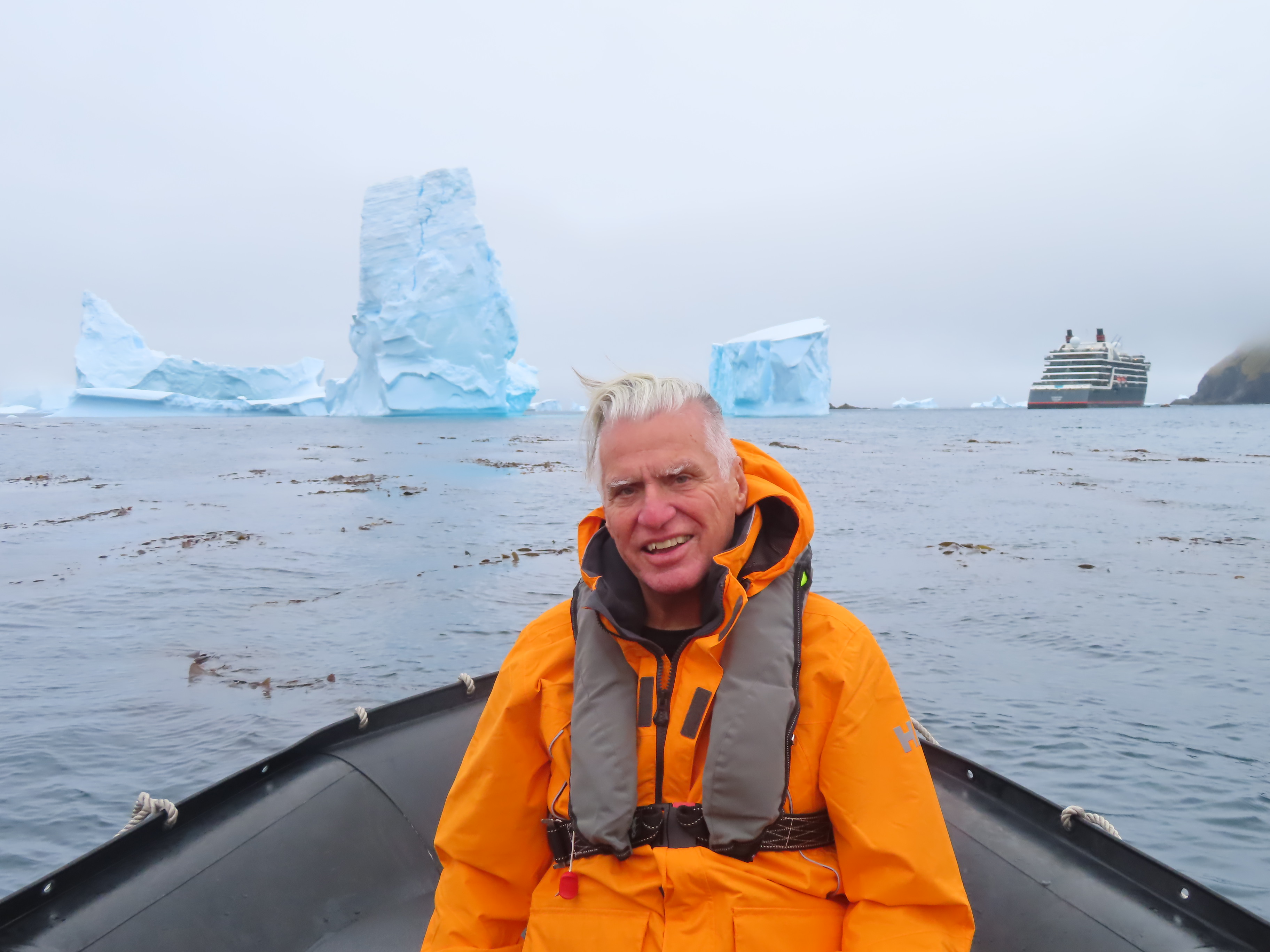
Three large icebergs have made their way into Gold Harbour and the zodiac gets close to one with a small group of penguins climbing over it

As we climb out of the zodiac on to the beach we are welcomed by a group of very young seals, that seem eager to get to know us

The beach is very narrow. Behind me the tussock grass is alive with seals, most of them hidden from view, but a precocious teenager wants to check me out

While another is a little more discreet

Then I hear a loud snore. At first I think it must be Gordon, but he decided not to come on this trip. I take a closer look in the grass and spot the enormous head of a female elephant seal, eyes closed, nostrils flared blowing out huge snores every few seconds. I am so close I can smell her fishy breath. I have to take a step back – she hasn’t flossed in a while.
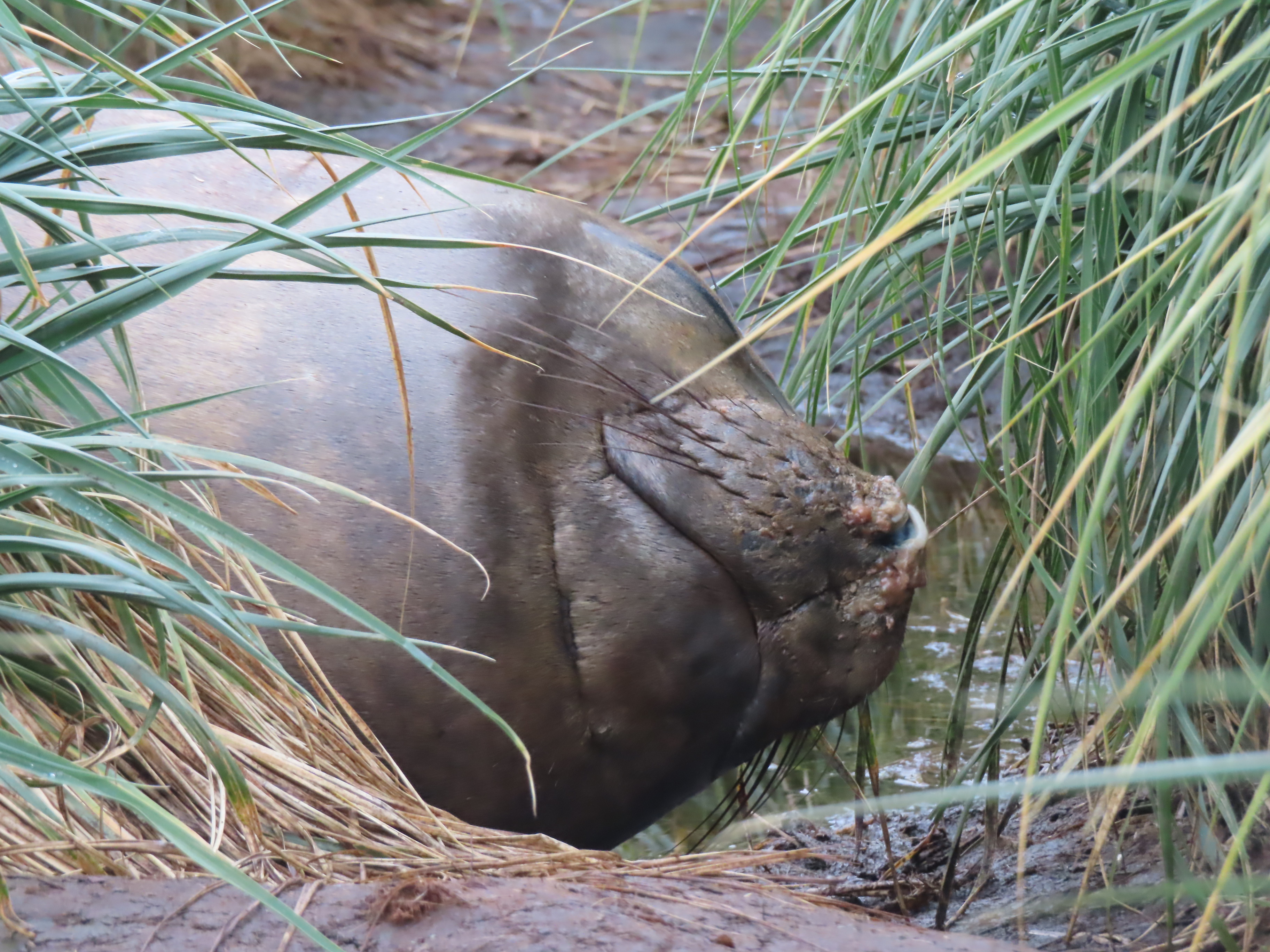
Just along the beach is the pair of elephant seals we had been told about. They are canoodling. Apparently elephant seals like to canoodle – don’t we all. Our guide tells us there is a technical term for it. Thigmotaxis – which is when two animals get comfort from touch. Personally I prefer canoodling and I doubt the elephant seals care what you call it. And how do elephant seals canoodle – very carefully! A fully grown elephant seal can weigh up to 8,800 lbs. That’s a lot to canoodle!
But back to the photo. Just beyond the seals is a penguin. It seems to have its head on one side and is watching them. It is quite safe as elephant seal don’t eat penguins, it is just the fur seals that do that. But we are not that safe as they can be very aggressive if they feel threatened by humans.
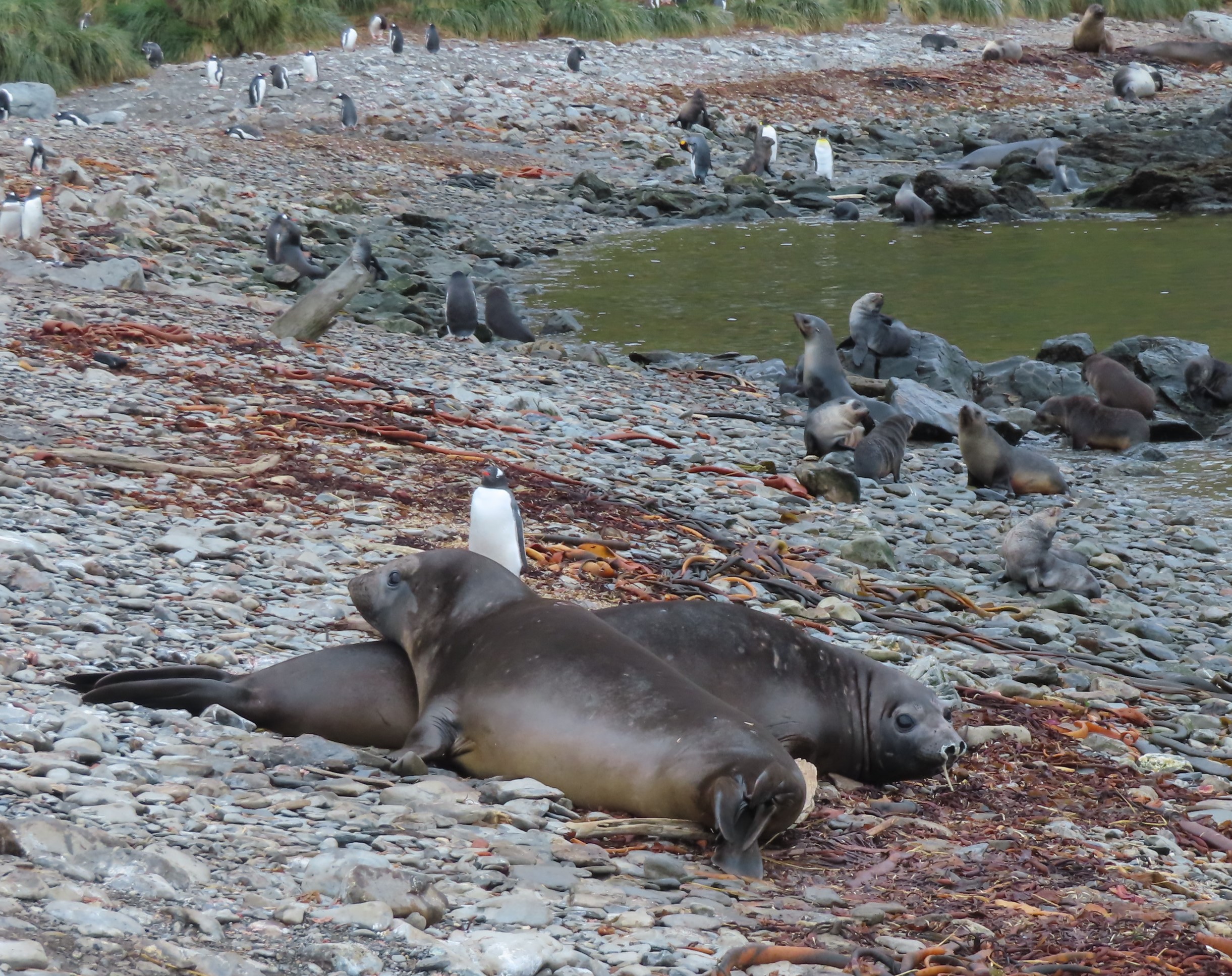
One of them seems to be looking straight at me, so I decide discretion is the better part of valour. I retreat to take a look at the giant petrel sitting on its nest.

It is a huge bird, second in size only to the albatross.

As I turn back I see our ship is moving. It is much further away than it was when we left.
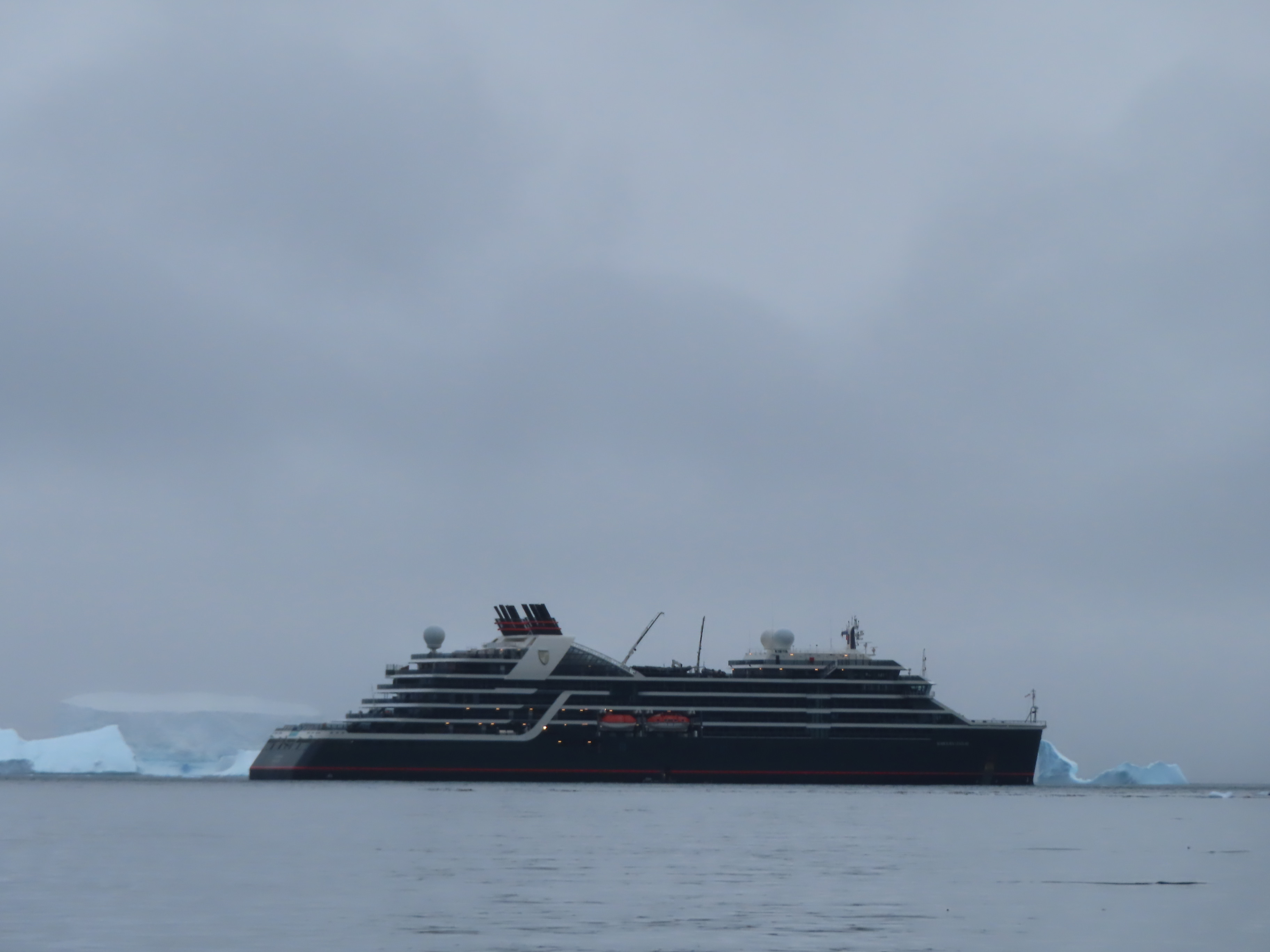
I have a moment of sheer panic. I can’t have been so absorbed in the wild life that I missed the last zodiac.
But no! The zodiac is still there. But the driver is waving at me and a handful of others still on the beach. We need to go – right now!
Apparently the icebergs in the bay have been closing in around the ship. The captain was concerned that the ship could become trapped and so he is moving out of the bay where there will be more room to maneuver. We are going to have a long zodiac ride back, but compared to the alternative, that’s fine by me!
This is our last stop on South Georgia Island. A few days later we learn that 10 penguins on the island have been found to have bird flu. It is too early to say how bad the outbreak will be, but it is devasting news for all the people who work so hard to keep the island pristine. We have just spent a wonderful few days with the penguins and everyone feels particularly affected by the news. Presumably some of the beaches will be closed to cruise ships now, maybe even the entire island.
We may be some of the last people allowed to visit this magical place for quite some time.
Every year Argentina submits a written claim to South Georgia (as well as to the Falklands) as they are required to do by International law. It is at times like this that one wonders whether Argentina would have the resources to do as much as Britain and the South Georgia Trust have done for this island and will be doing in the immediate future to control this outbreak.
 Andrews Fabulous Travel Blog
Hundreds of elephant seals at año nuevo beach south of San Francisco. Somewhat better weather as well.
ok I’m going to be controversial here. And I’m not making any personal judgements, but I think all cruise ships should stop travelling to these places for a least a couple of years to give the islands and wildlife a chance to recover. I know it’s a difficult thing to comprehend, as the tourist industry is huge and some places need the revenue to survive. But in years to come there may not be anything left to see, just a very dead place. Safe journey to you both and the ship. Wherever you may be. xx and yes I know there is bird flu in this country. And it’s devastating for all birds.