
And so it was, at 4:00 PM on August 10th, 1628 the warship Vasa finally set sail in Stockholm harbor on its maiden voyage as the newest, largest and most impressive ship in the Royal Swedish Navy.
King Gustav II was there on the harbor arm, puffed up with pride. Although how could you tell? He was puffed up enough as it was. With him were several Admirals from the Navy and advisors from his court. The King was certain that if it wasn’t for his impressive improvements, the Vasa would just be another ship and no one would be there to celebrate its maiden voyage
It was a beautiful day, the seas were calm, and the wind was slight. It was as if the King had ordered it be so. And if could claim he had, he would.
Thousands of excited citizens lined the adjacent beach. They gasped in awe at their first sight of the Vasa, and as the ship pulled away from the dock, they roared their appreciation.
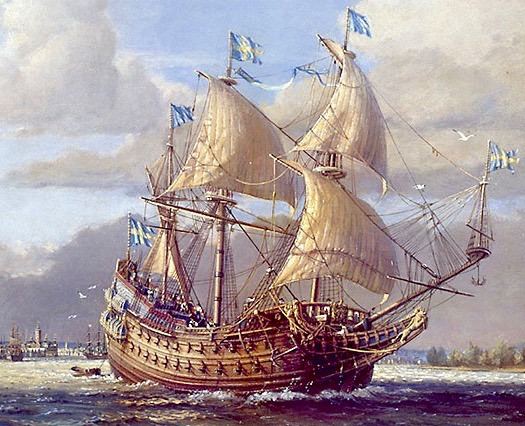
The King puffed up some more. How much puffing could one pear shaped man do ?
But it was all so very short lived.
After sailing just 1400 yards, a small gust of wind caused the Vasa to heel over on its side. The crowd went silent.
But the ship righted itself.
The crowd cheered.
But then another gust of wind came, and again the ship heeled over. But this time water poured in through the open gun portals. Within twenty minutes of its launch, the Vasa, the King’s greatest achievement, sank to the bottom of the ocean.
A large colorful sculpture of the King was the last thing to be seen before it too disappeared beneath the waves.
30 sailors lost their lives. The others managed to swim ashore. They didn’t have far to go

The King, unpuffed and incandescent with rage, looked for someone to blame. Anyone other than himself. Clearly this couldn’t be his fault. Just at that moment, word came that the captain had survived. And the King had his answer. The captain was the perfect scapegoat. That would work perfectly! The King demanded his immediate arrest and he was promptly thrown in jail.
But the very next day a preliminary board of inquiry was convened. Incompetence of the captain and crew was ruled out. The captain was set free.
The ship itself lay beneath the shallow waters of Stockholm harbor for three centuries, largely forgotten, its exact location lost in the mists of time.
But in 1956 the wreck was discovered and found to be in remarkably good condition. The official reason was that the cold, oxygen-poor water of the Baltic Sea protected Vasa from the bacteria and worms that usually digest wooden wrecks. The unofficial reason was that the centuries of raw sewage discarded by the city of Stockholm into the shallow protected waters of the harbor had formed a murky (their word for gross and disgusting) layer on the ocean floor in which no bacteria or worms could possibly live. But whatever reason you care to believe, the Vasa when finally brought to the surface and pumped free of water and mud (read sewage!) could still float on its own. A remarkable 95% of the original was wood still intact
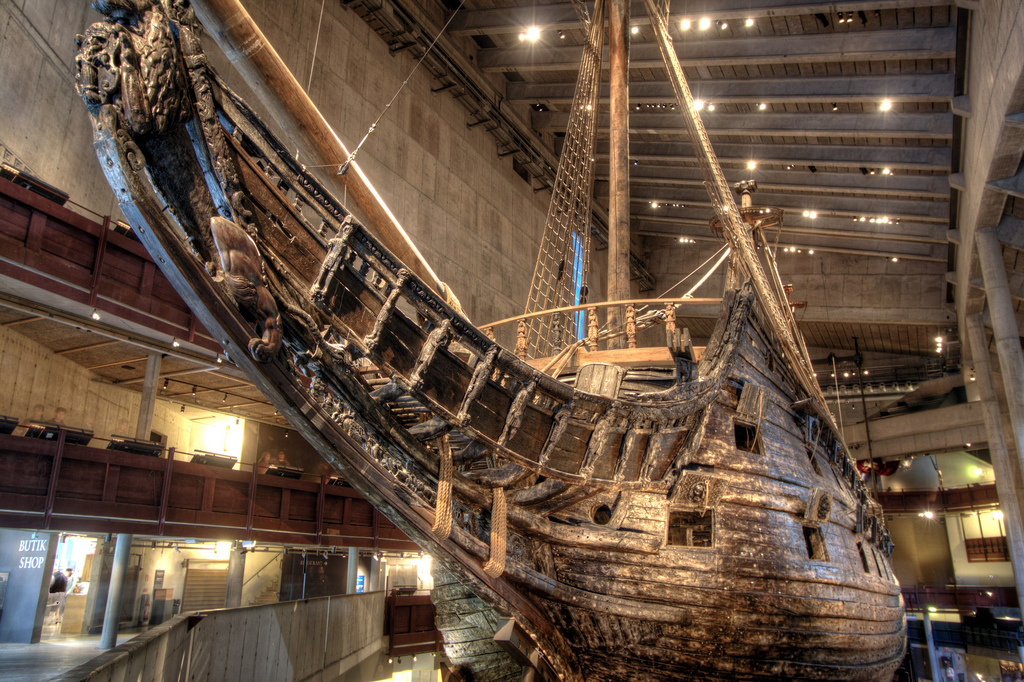
And now in the 21st century, it has achieved the fame that it never achieved 400 years ago. Sitting in a museum in Stockholm made especially for it, the Vasa looks every bit as impressive today as it did 400 years ago. It is the only preserved 17-century warship that exists in the world.

In fact it has become a massive tourist attraction.
Would that make King Gustav II proud?
Maybe. But only if it was THE BIGGEST tourist attraction in Sweden.
And it may not be.
That prize may go to another Museum that unfortunately sits right next to the Vasa Museum.
The Abba Museum.
Now that would be cause for another incandescent fit of rage.
 Andrews Fabulous Travel Blog