
Our captain sets a south easterly course along the coast of South Georgia Island, which turns out to be fraught with danger, as the sea is full of icebergs

There is a giant table top iceberg between us and the bay we are trying to reach

As the captain carefully maneuvers the ship around it we seem to get alarmingly close to another one

But as you are reading this, you know that we haven’t gone the way of the Titanic, although we do take a moment to remember Leonardo DeCaprio and Kate Winslet, allowing Gordon another opportunity to show off his legs despite the temperature hovering just above freezing.

Finally the ship turns into King Edward Cove, considered the best harbor on the island. It is easy to see why. It is totally sheltered from the weather and clear of icebergs.
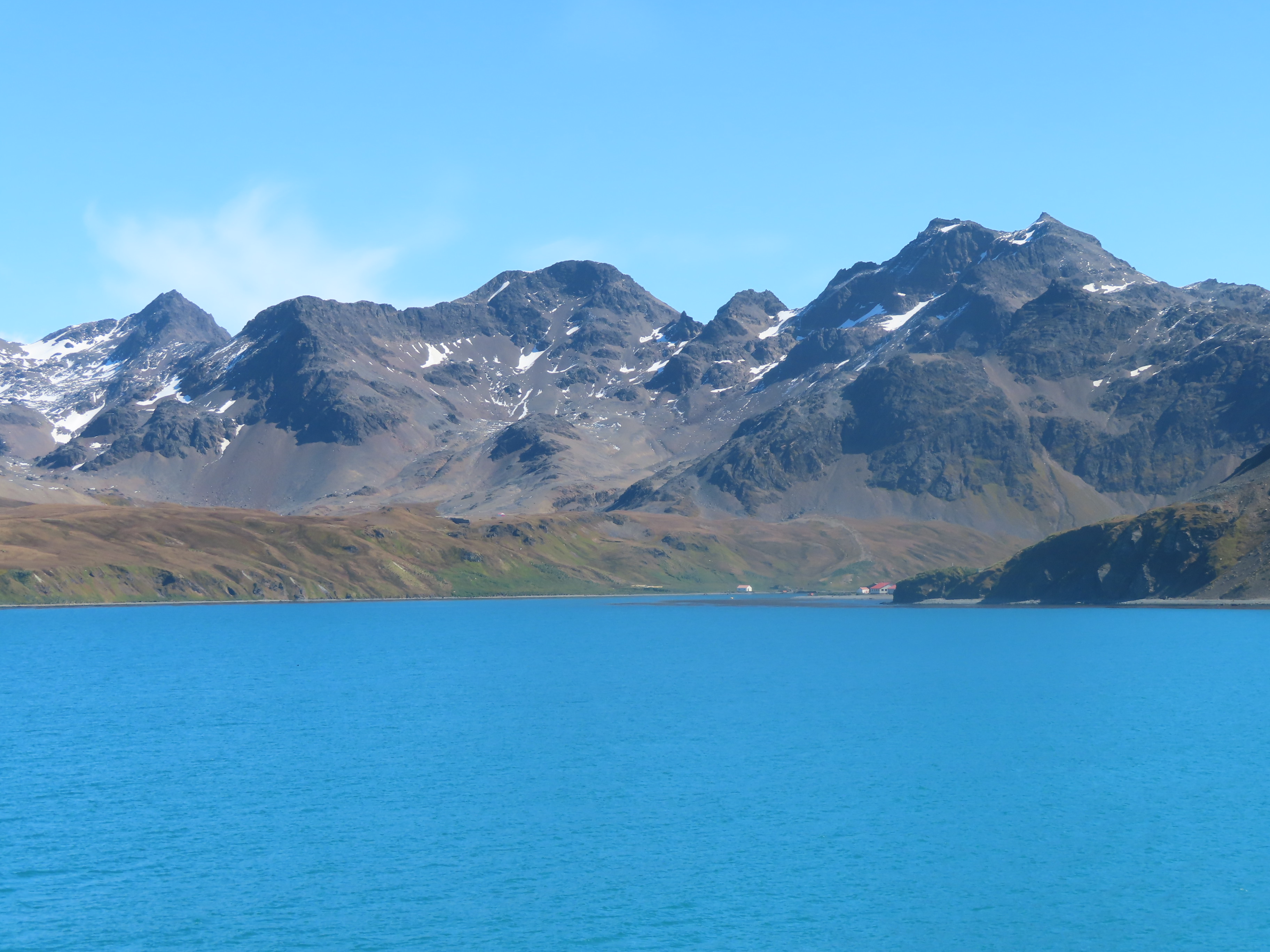
At the end of the bay sit the ruins of one of the largest of all the old whaling stations.

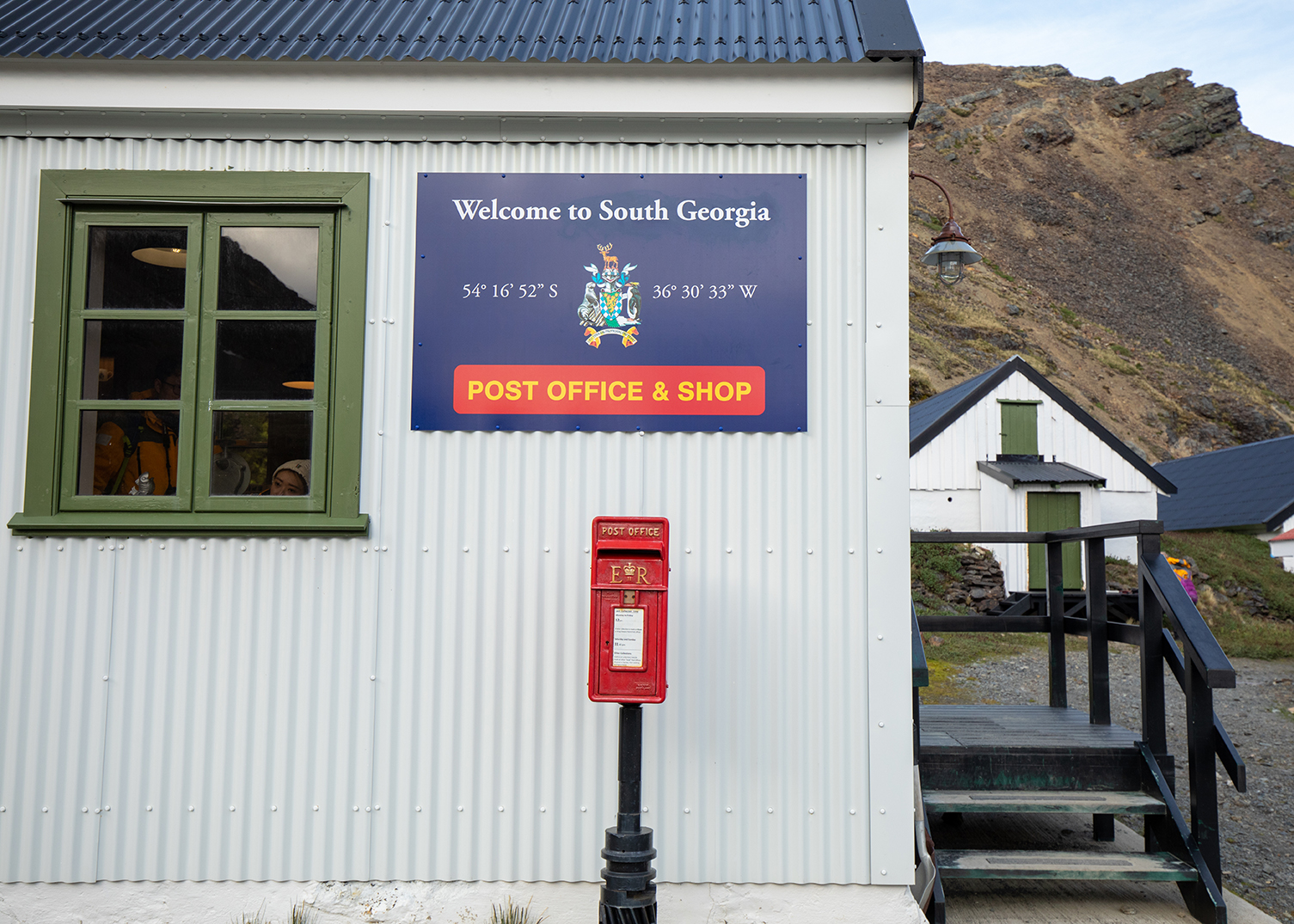
This is Grytviken, well known to many as the place where Shackleton is buried and where the South Georgia Trust have set up shop. They have opened a post office and a gift shop,
restored some of the buildings, including the church
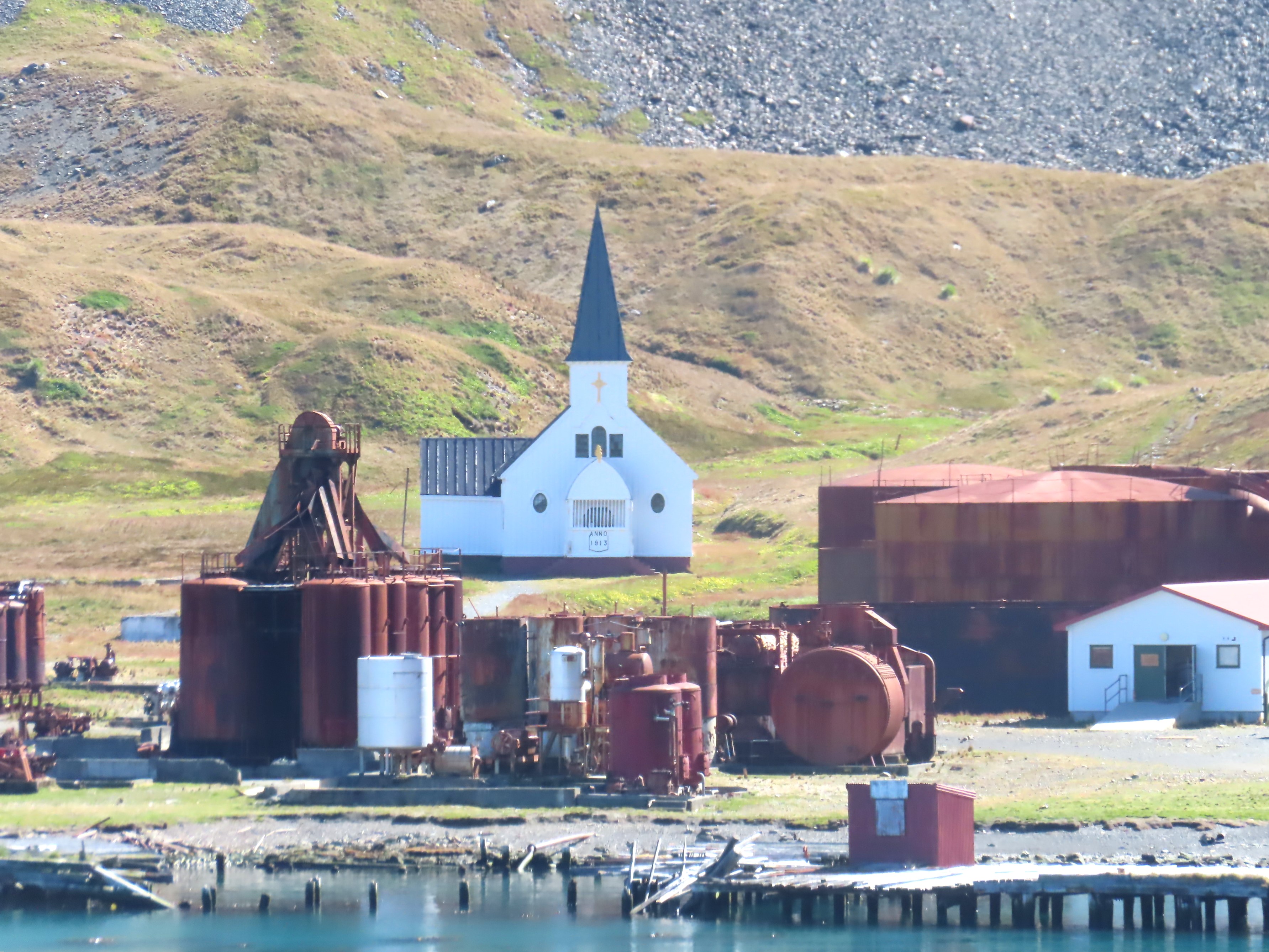
and created a fascinating museum about life here when it was a whaling station.
During the summer months (October to March) there are up to 30 people living here. Most of the sensible ones get out of here by the end of March, but a few crazy ones stay for a year or maybe two. But no one is quite crazy enough to become a permanent resident.
Avian flu which has decimated some bird populations around the world, has reached the South Georgia Islands, which is of great concern to the conservationists. Even more worrying is a case where it has been found to have transferred to a seal. Because of this many areas with penguin colonies and colonies of seabirds have been closed to all ships. The list of closures seems to change daily depending on the health of different colonies. We have just been told that while we are allowed to make a stop at Grytviken, we will be restricted to exploring only parts of the whaling station and we won’t be able to walk around the bay to see the many penguins and seals that call this home. But an even bigger disappointment for many passengers is that we won’t be able to visit Shackleton’s grave, which is about a 1/2 mile walk away. We have to make do with photographing it from the ship.
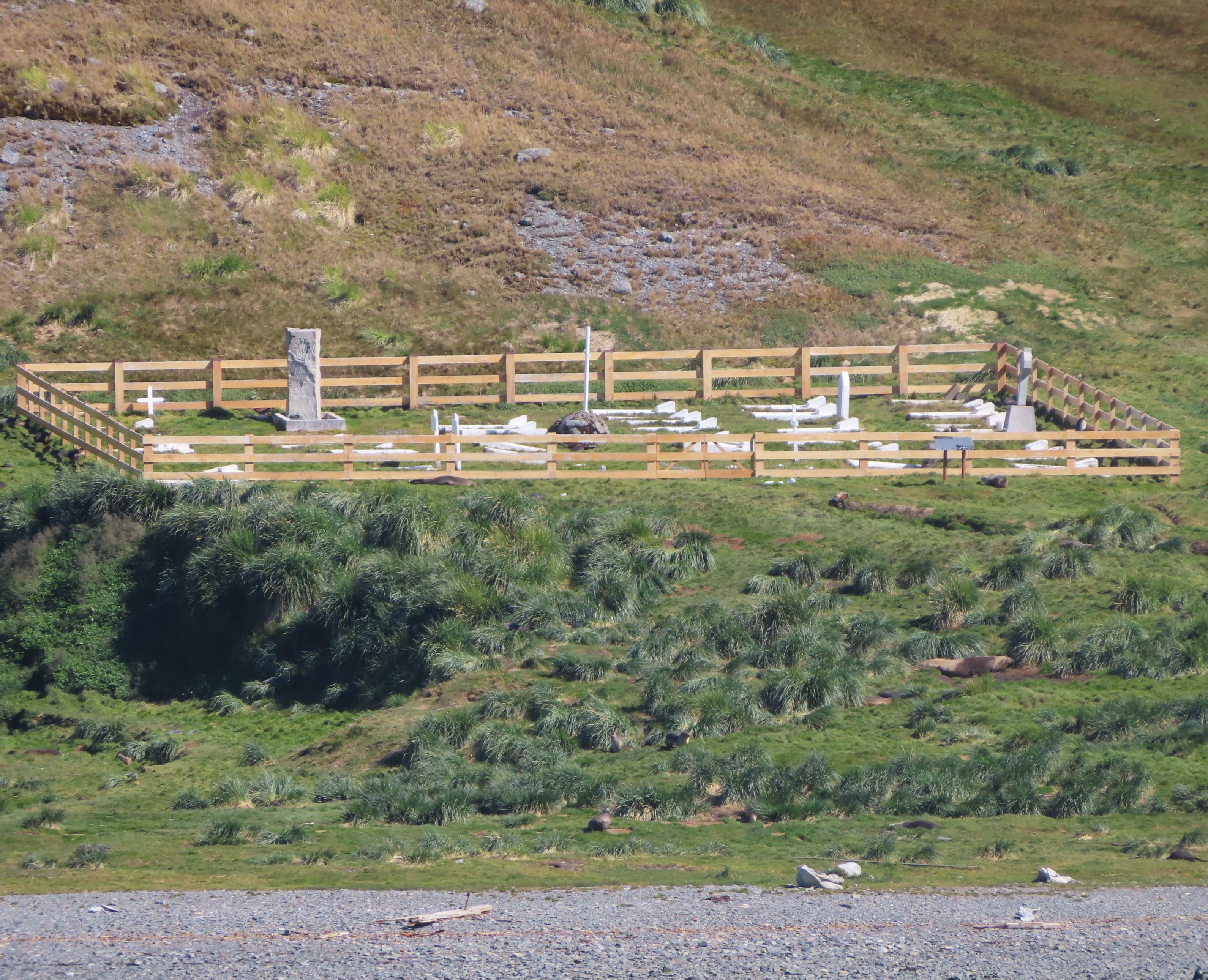
Shackleton survived the trek across the mountains but later died of a heart attack on this island. His wife asked that he be buried here ostensibly because he loved it so much, a story that all his admirers readily accepted and which added even more gravitas to his legacy.
But there is another explanation. This one involves gossip, another woman, a torrid affair and the revenge of a woman scorned. I am loving it already. Shackleton was apparently known to be having a very public affair with a younger woman who was a well known actress. When he died his supposedly grieving widow was no such thing. She was quite happy to leave his body at the other end of the world. She would not be visiting his grave and had no intention of spending any of her inheritance on bringing back the body of her philandering husband. You must admit that is a much more entertaining version of the facts, although it does beg the question as to how Shackleton found the time or the energy to have an affair!
The zodiacs drop us on the beach right next to two rusting relics
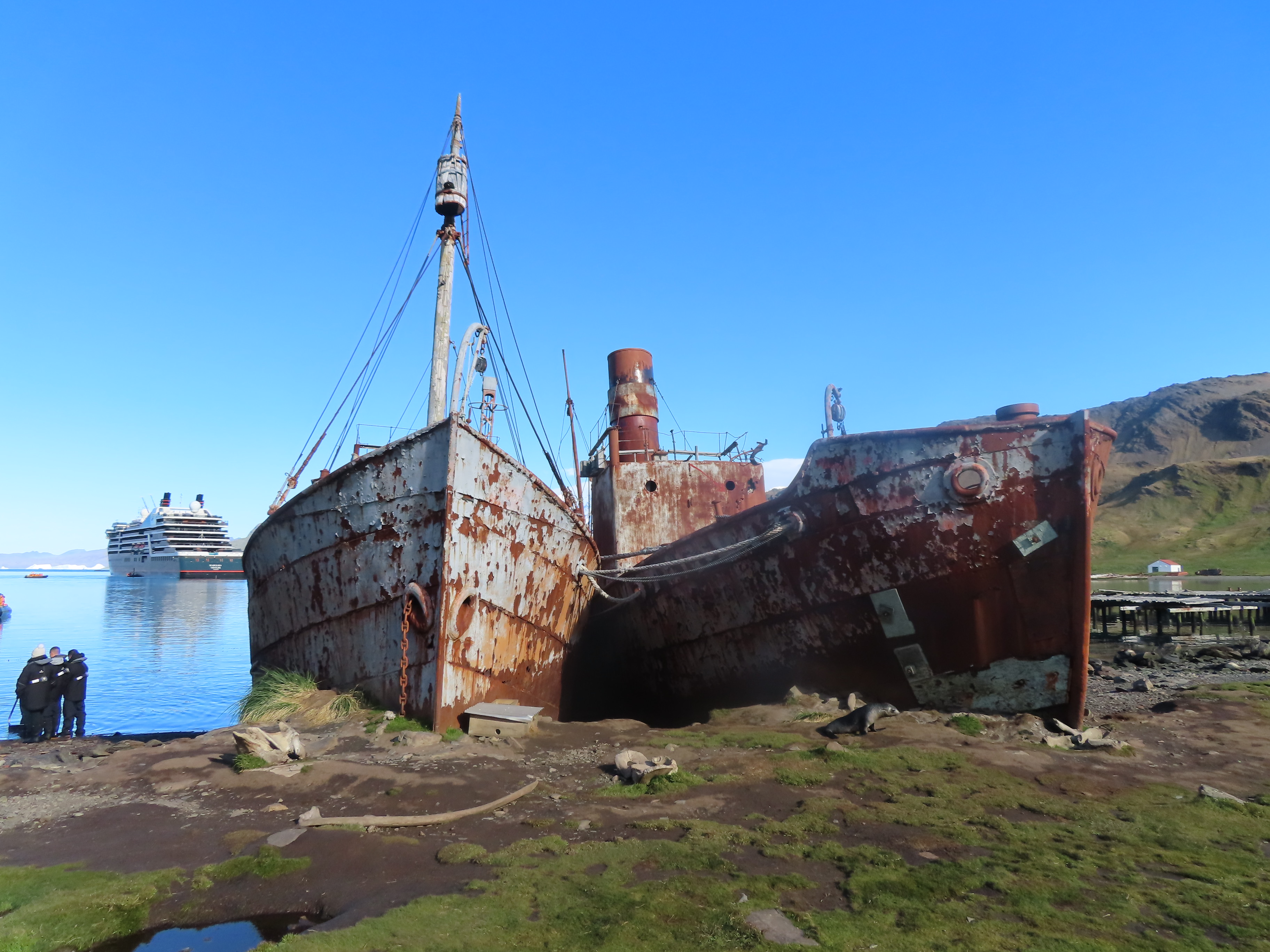
These are the infamous whaling ships abandoned in 1969 when the whaling station closed down. They were partly responsible for the mind boggling 170,000 whales that were slaughtered at this one whaling station.
Just past the ships are a vast number of tanks where the blubber from the whales was boiled down to make whale oil.

The oil was then stored in huge vats waiting to be shipped to the Americas and Europe.

The machinery required to generate the power to run this busy whaling station still stands in neat rows on the edge of the bay
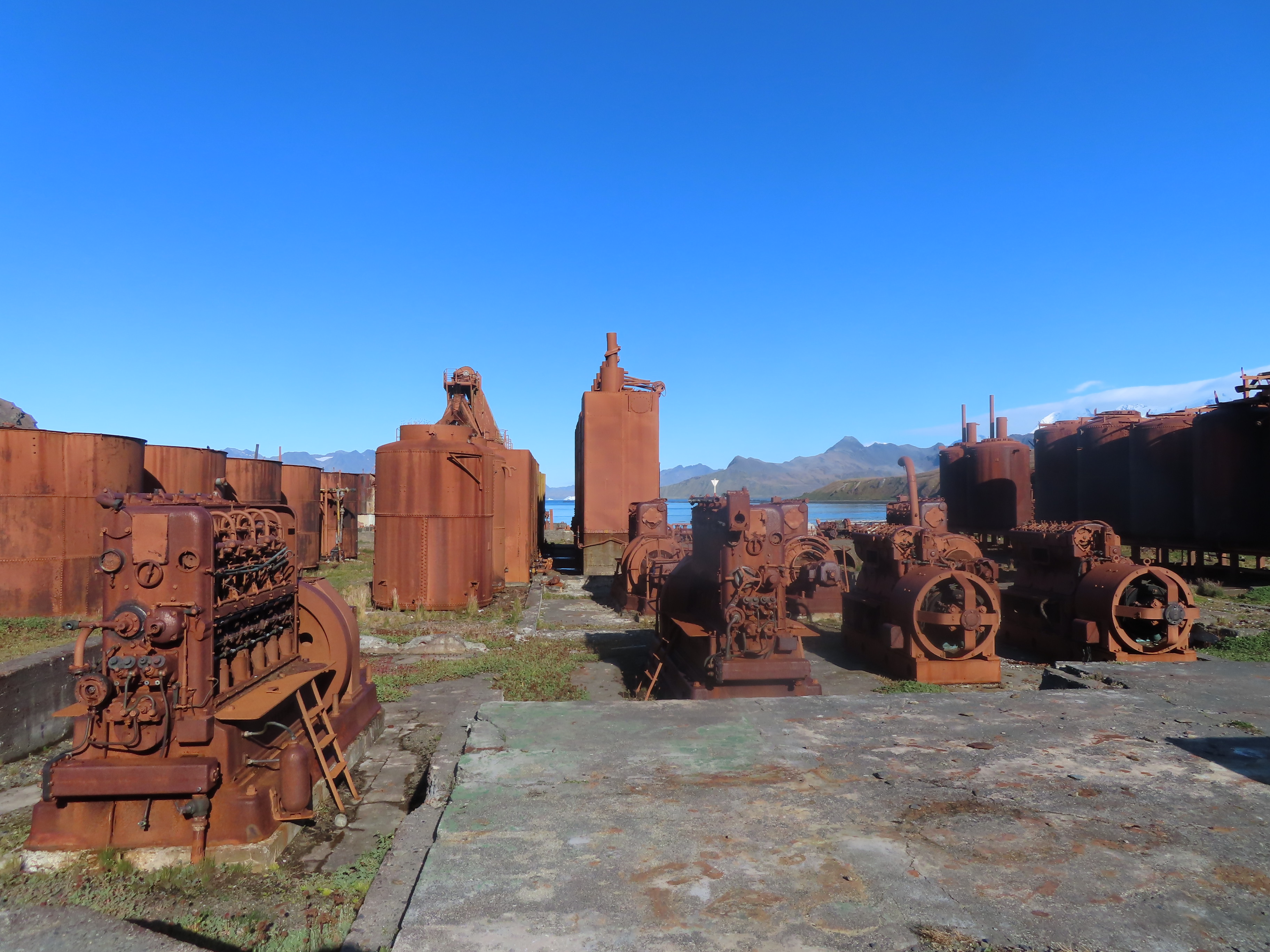
It looks more like an art installation than the beating heart of the entire operation.
The South Georgia Trust now has the unenviable task of deciding what to do with this rusting reminder of what happened here. Do they dismantle it and remove it from the island which would obviously be the best thing for the environment but which would be a formidably expensive operation, or do they let it slowly rust away as a vivid reminder of what happened to the whaling industry?
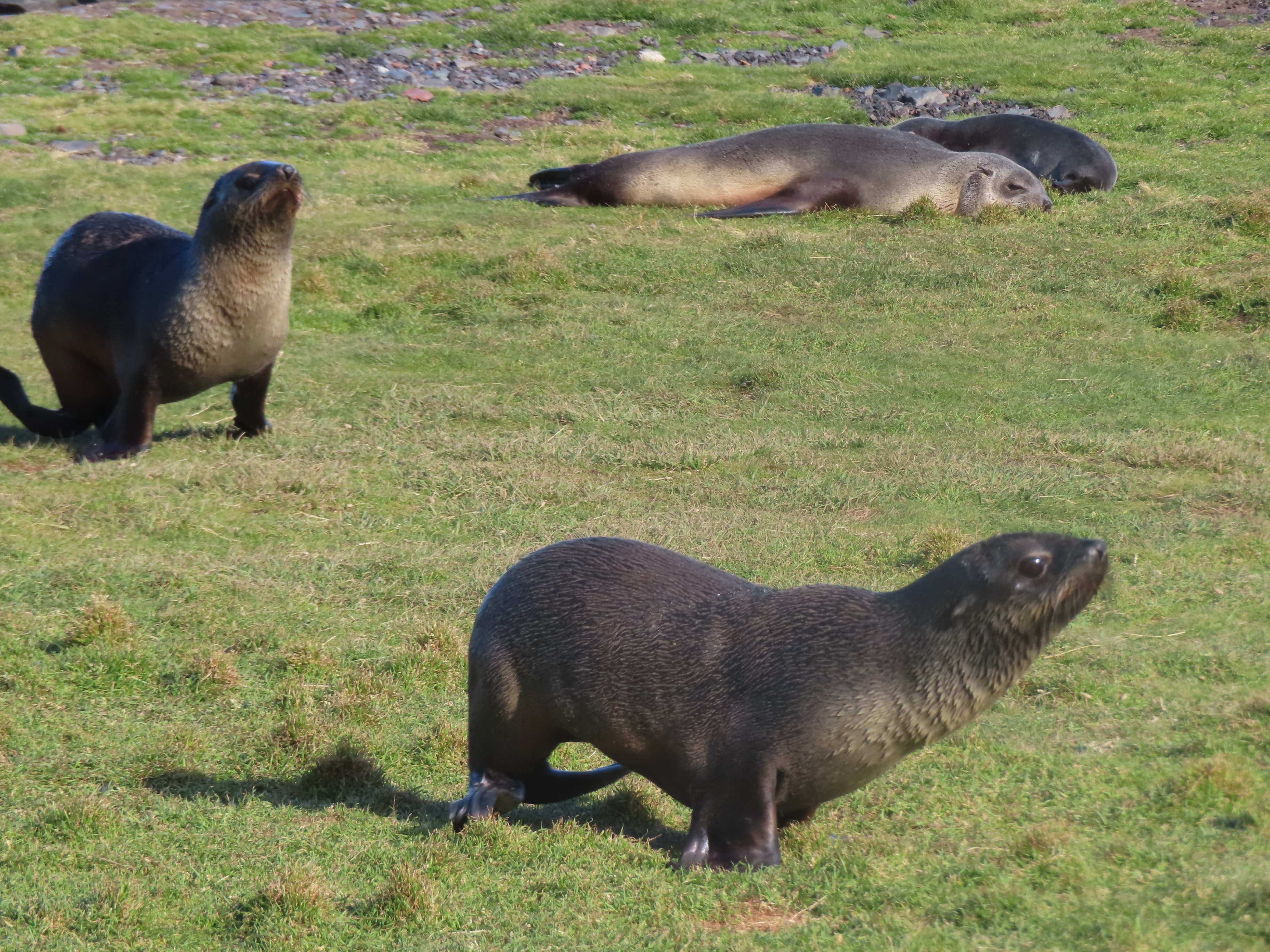
Meanwhile the seals have reclaimed the site as their own. The grass around the machinery is full of young pups chasing us and each other
We even spot a very rare white pup
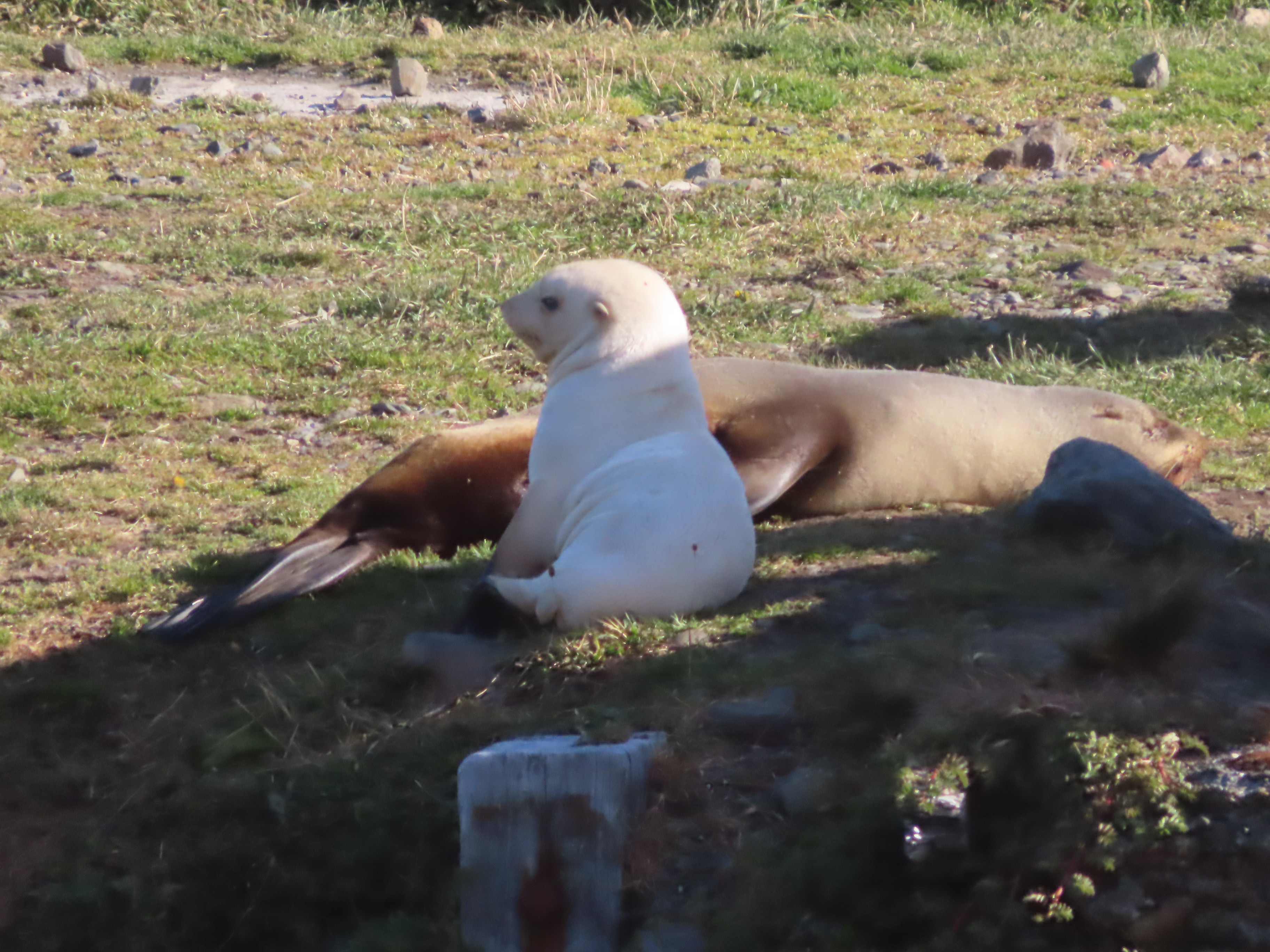
And there is a mother feeding her child, both looking fat, healthy and content

It reminds us that it is time to return to the ship where we too will be fat, happy and well fed. As we make our way back to the waiting zodiacs, it feels good to realise that the new generations of seals is reclaiming the bay that once threatened their very existence.
 Andrews Fabulous Travel Blog