
I know you were hoping for a little rest from the blog, but that is not going to happen.
No one is more surprised than me to find us setting off on yet another trip so soon after the last. But Seabourn had a Black Friday Sale in November and 30% off this 26 days cruise on their new Expedition ship was just too good to turn down.
Our journey starts at the southern most tip of Argentina where the Andes meet the Beagle Channel. Between the two there is sliver of land just wide enough to accommodate the port town of Ushuaia. A jumbled assortment of colorful houses and steep streets is home to 82,000 people who find the setting too beautiful to resist, despite an unfriendly climate. The cold summers and colder winters are not helped by a constant wind that makes it seem even colder.

Unbelievably there are 6 small cruise ships in port today, undeniable proof of the increased popularity of cruising to Antarctica. Our ship, the Seabourn Venture, has been doing just that for the last three and a half months. But the brief Antarctic summer is turning to winter and the Seabourn Venture is departing Ushuaia for the last time. This time it is only venturing west to the Falkland Islands and South Georgia before turning north and visiting some tiny remote islands in the middle of the Southern Atlantic Ocean on its journey to the northern hemisphere.
The ship holds just 260 passengers, but today there are a mere 170 people coming on board. As an expedition ship going to remote areas of the earth where every stop can only be accessed by zodiac we are expecting a younger crowd. But we are shocked to see that most of the passengers seem to consist of the aged, the infirm and the cheap, presumable attracted by the discounted fare. Now dear readers, before you make any unnecessary comments, I do recognize that I now qualify as the aged, and have always qualified as cheap, but I can still get in and out of a zodiac without any problem. This lot can’t. They arrive with their walking sticks and canes and in one case a wheel chair. Walking up the short and not very steep ramp from the pier to the ship is a struggle for many and we have to lug the small carry on bag of one such passenger while he uses both hands to haul himself up the steps.
It does not bode well. But this is Seabourn so we know how to cheer ourselves up. We head straight to our cabin where we can partake of our usual indulgence,
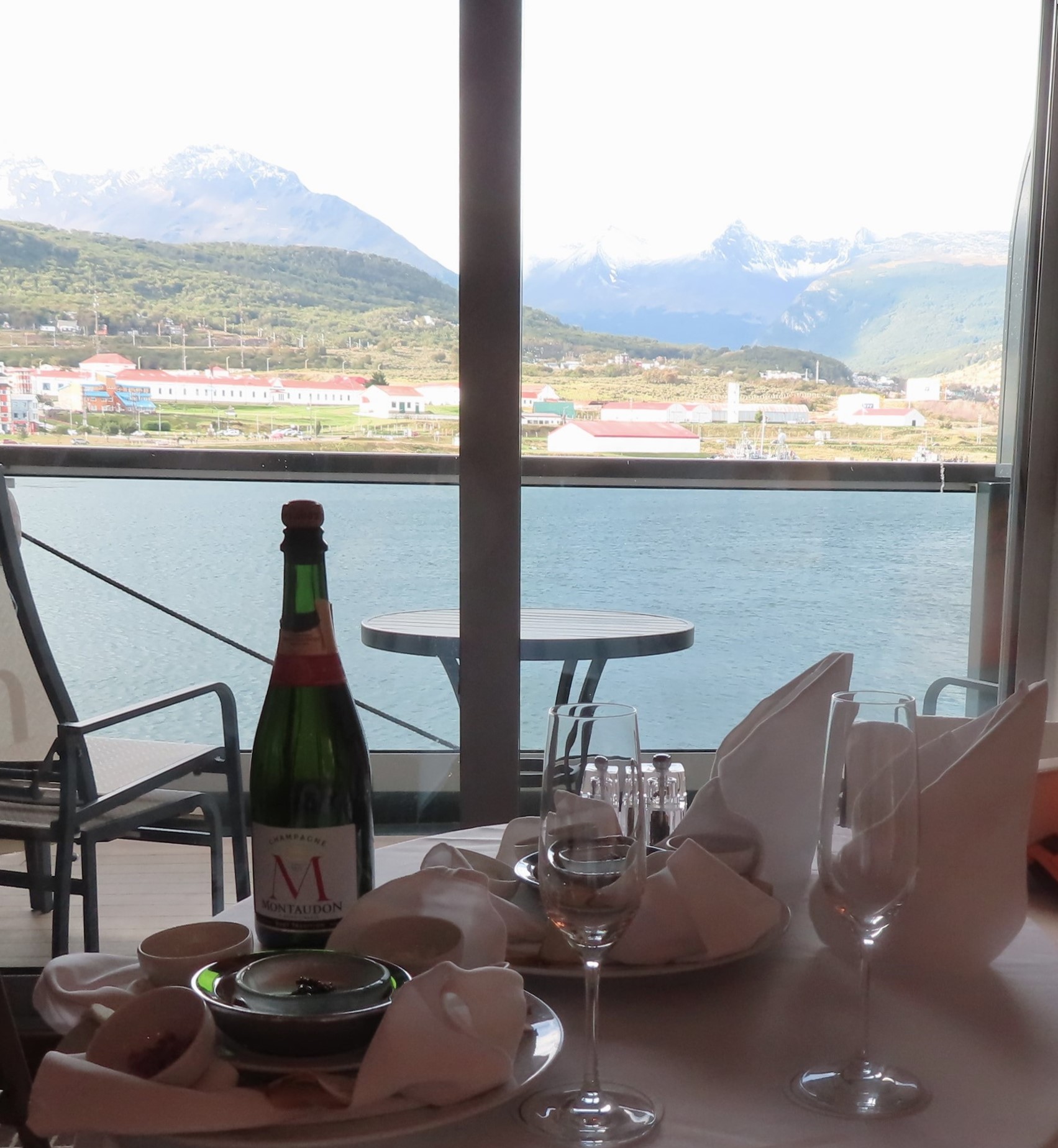
Two large portions of caviar and a bottle of Champagne soon quells any misgivings, as we watch Ushuaia fade into the distance.
Our first stop involves the albatross and their homemaking skills. The albatross needs three things for a suitable nesting ground. A lot of mud which they use to build their nests, tall clumps of tussock grass which they use as protection, and a lot of wind which they need for take off. The dramatic cliffs on West Point Island are, as the albatross will tell you, the perfect place for them to breed as it provides all three of those things. It is also spectacularly beautiful
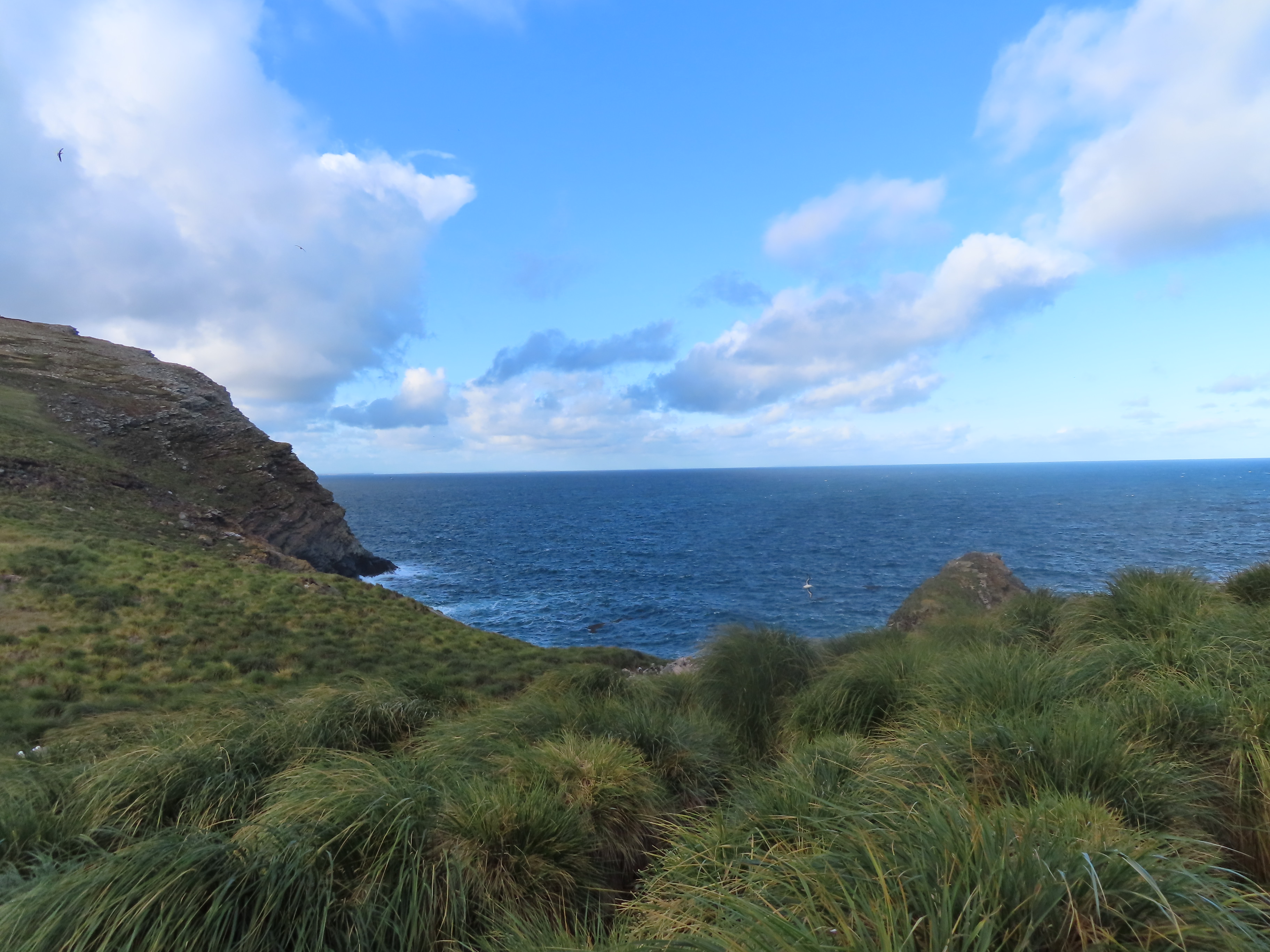
West Point Island is a tiny island off (you guessed it) the western most point of the West Falkland Island. It was formerly known as the Albatross Island, which seems a far more appealing name and one that would attract tourists, but some smart person, presumably a government employee (not a group of people known for their intelligence or their creativity), decided to rename it West Point Island, a name that will attract no one and will be forgotten by everyone. Just saying the name makes me want to yawn with boredom.
The cliffs on the island may be perfect for the albatross, but the winds and the rocks make it impossible for ships to land there. Instead our ship has to anchor off the east coast of the island leaving your intrepid traveler to make a two mile hike across the island
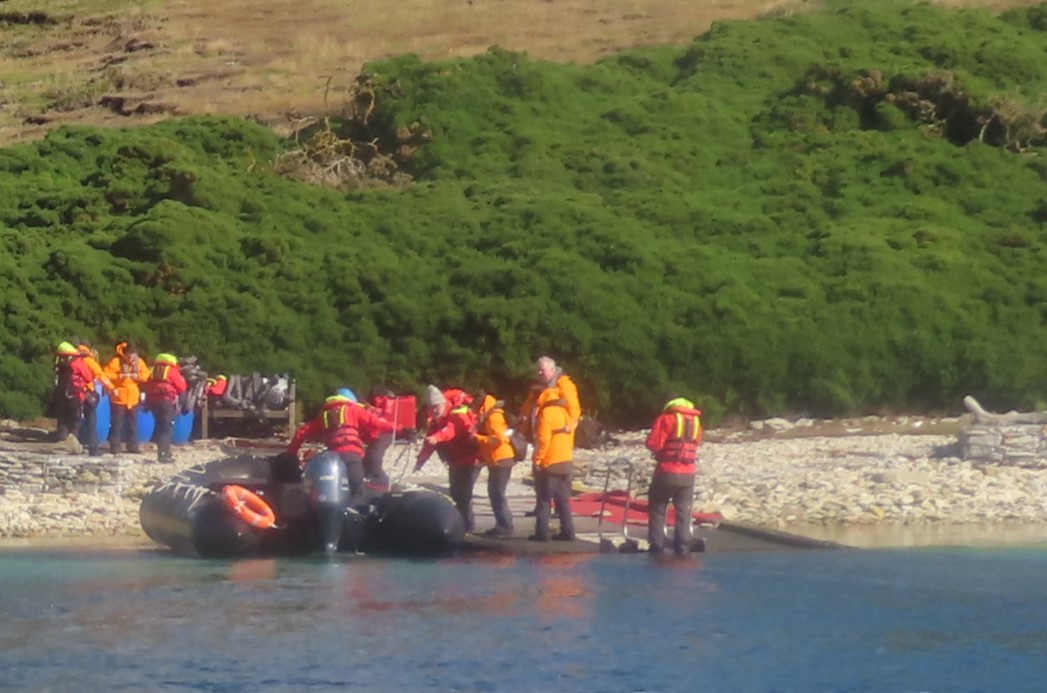
But first we have to get off the ship and onto the zodiac, a feat that is a challenge for many of the passengers. This does not stop them from making the attempt. Each zodiac takes twelve people and it takes an age to get all twelve settled safely, if not comfortably. The crew as always are magnificent and manage it all without losing a single passenger to the waves.
Ten minutes later the process is reversed and passengers now have to be hauled out of the zodiac and onto dry land
And then the trek begins.
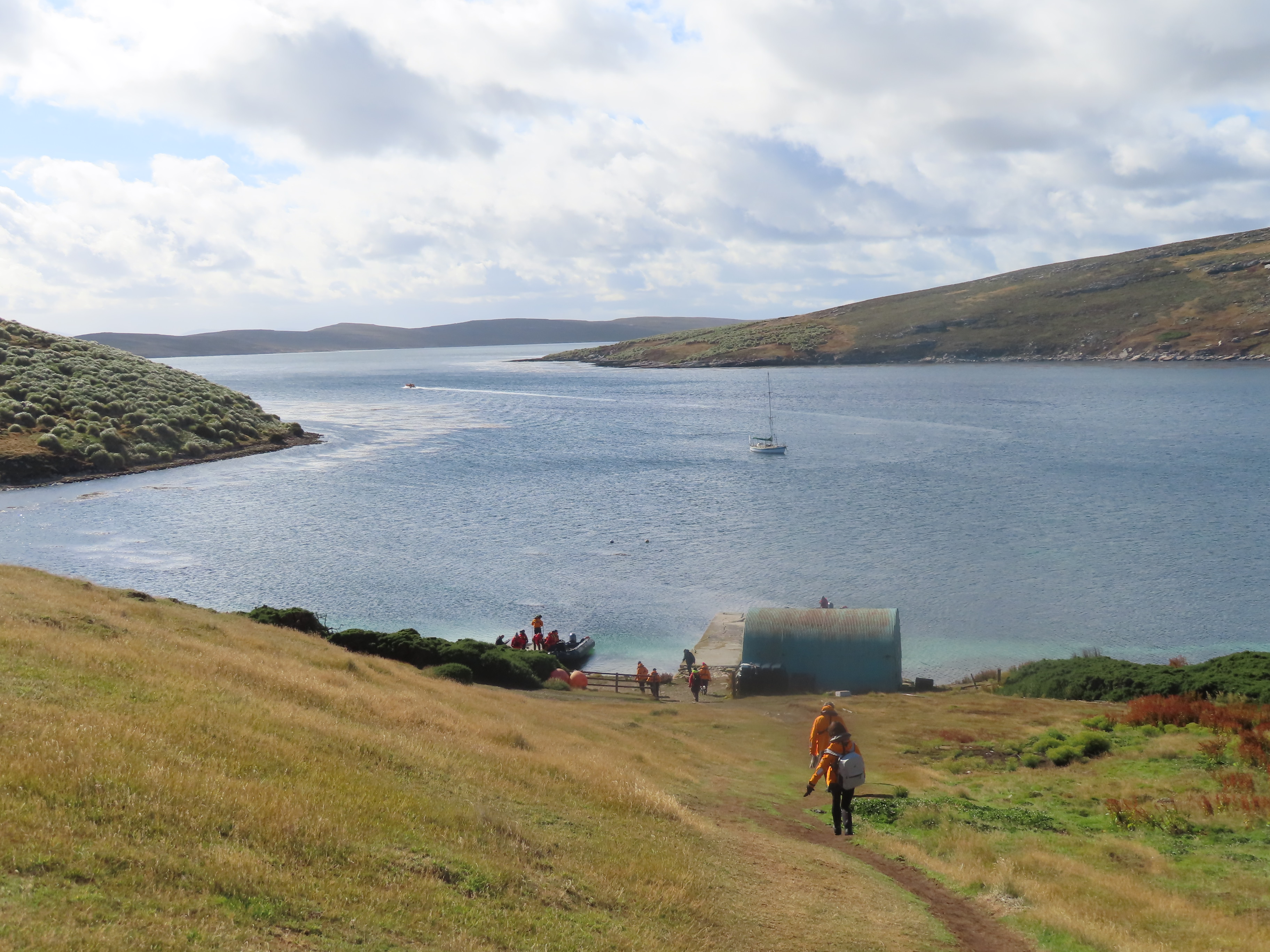
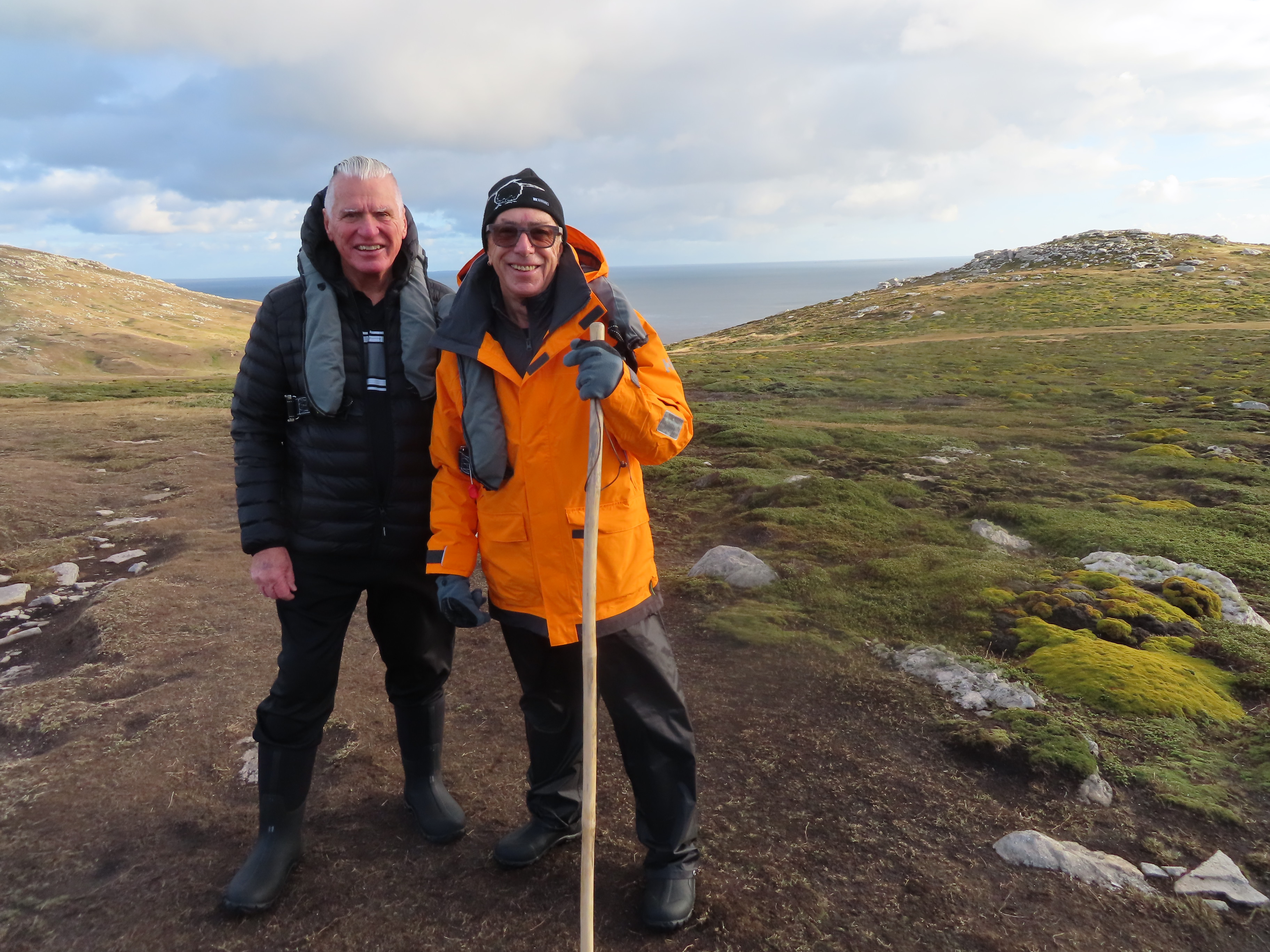
The first half mile is up a long hillside. It affords beautiful views but presents an overwhelming challenge to the aged, the infirm and the cheap. They drop like flies, complaining loudly that no one warned them that it was going to be this hard. Gordon manages it without a word of complaint and poses for a photo to prove it.
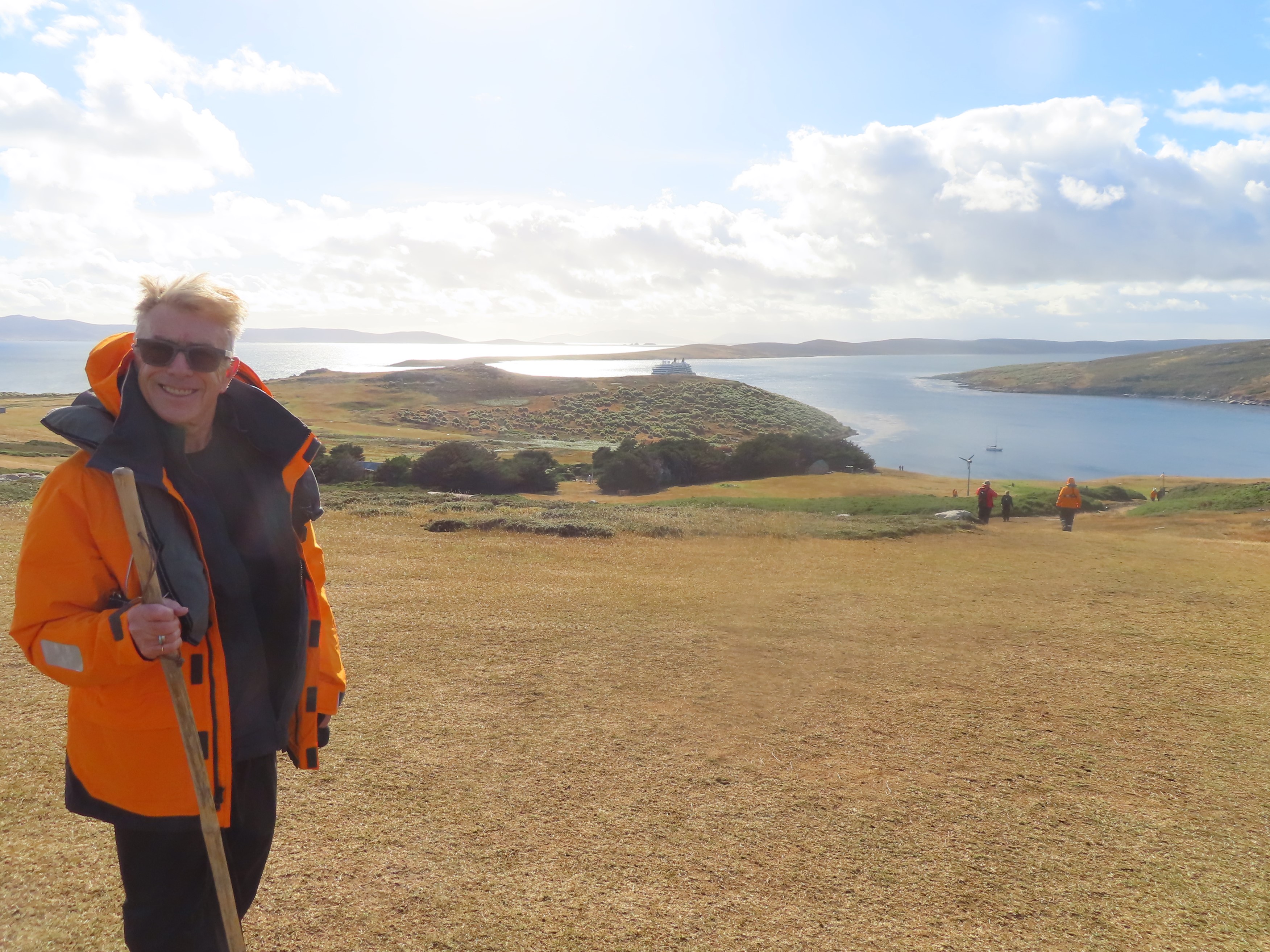
No one is going to call him aged, infirm or cheap. Well, not to his face anyway.
But then the going gets easier.
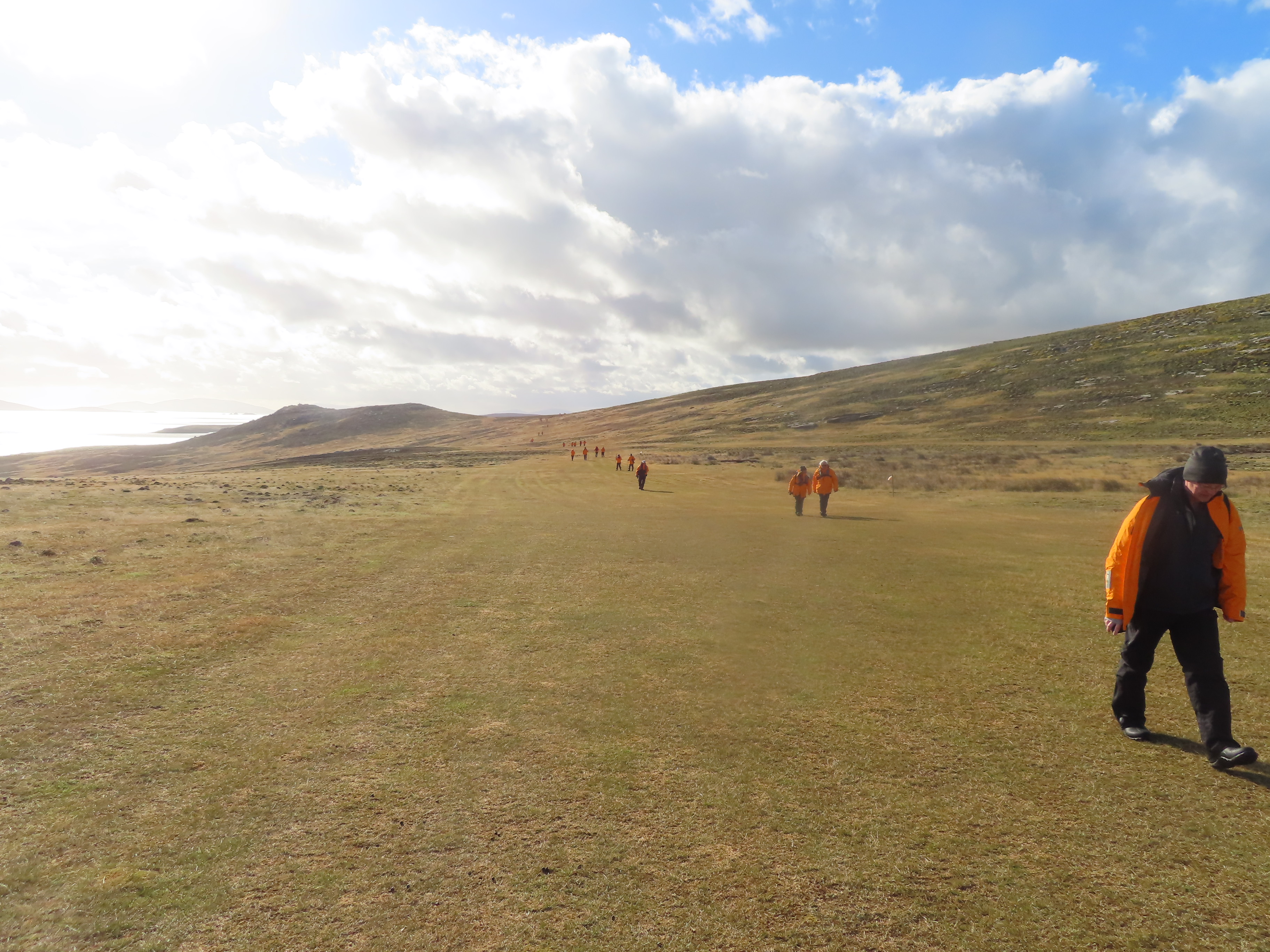
The scenery is lovely, the weather is chilly but sunny, and the prospect of what lies ahead is exciting.
As we near the cliffs the wind gets stronger and the temperature drops. We climb a stile over a wire fence and there below us are the cliffs, and fields of tussock grass. We know the adventure is about to begin
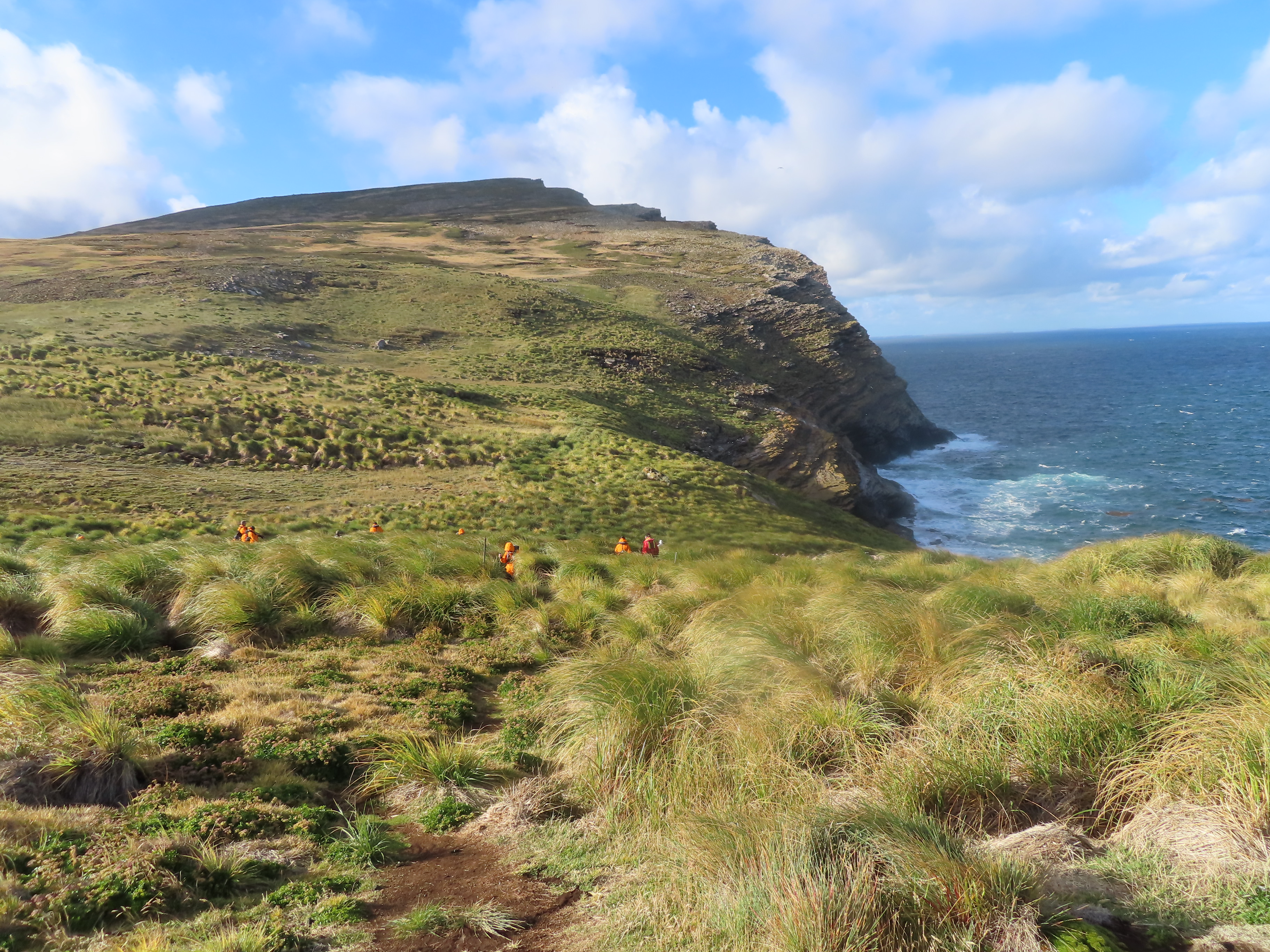
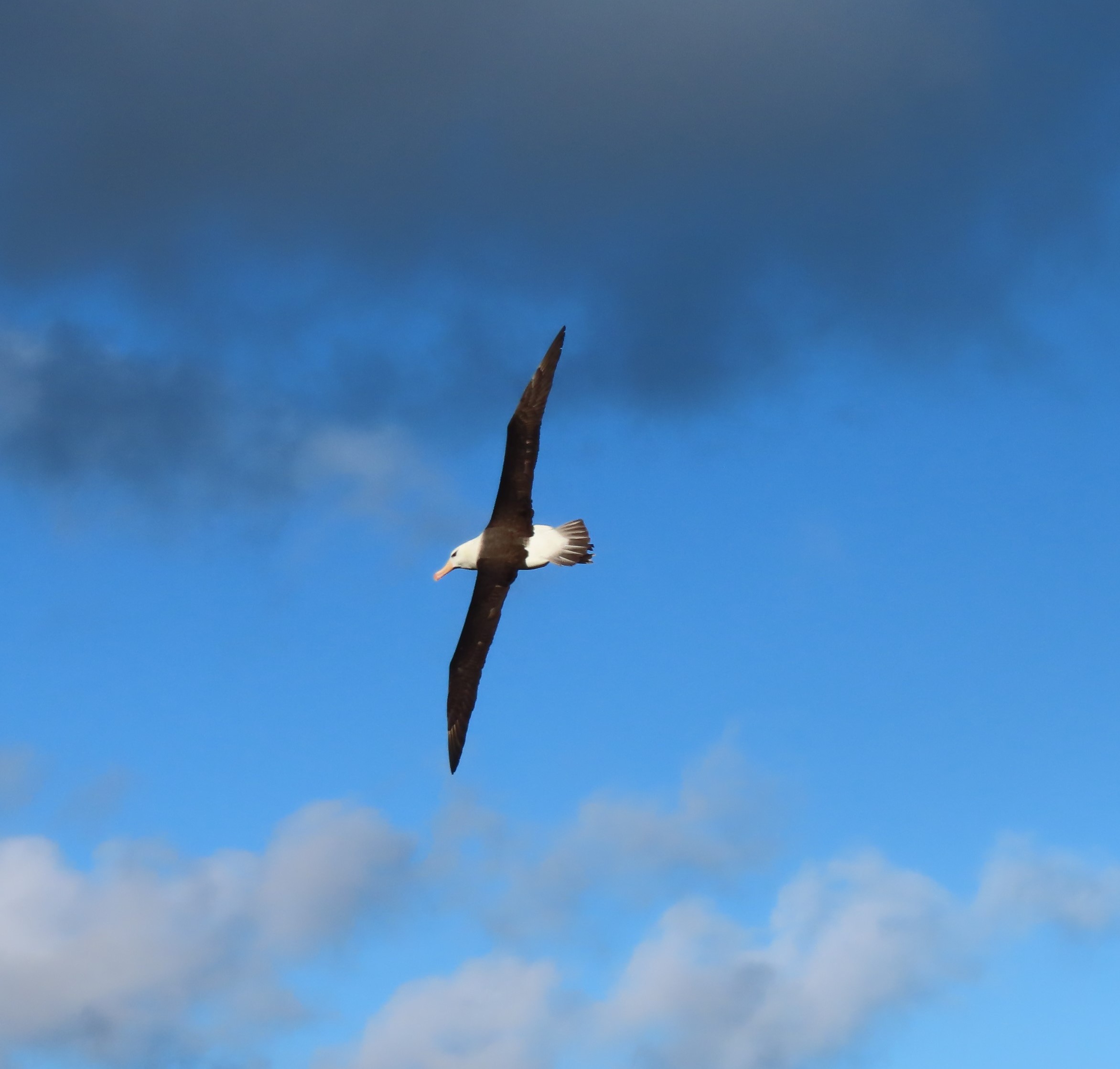
Albatross soar over our heads, ever graceful in the air, as they ride the winds over the cliffs
The cliffs are covered with hundreds more of the birds, their nests and their chicks. It is an amazing sight.
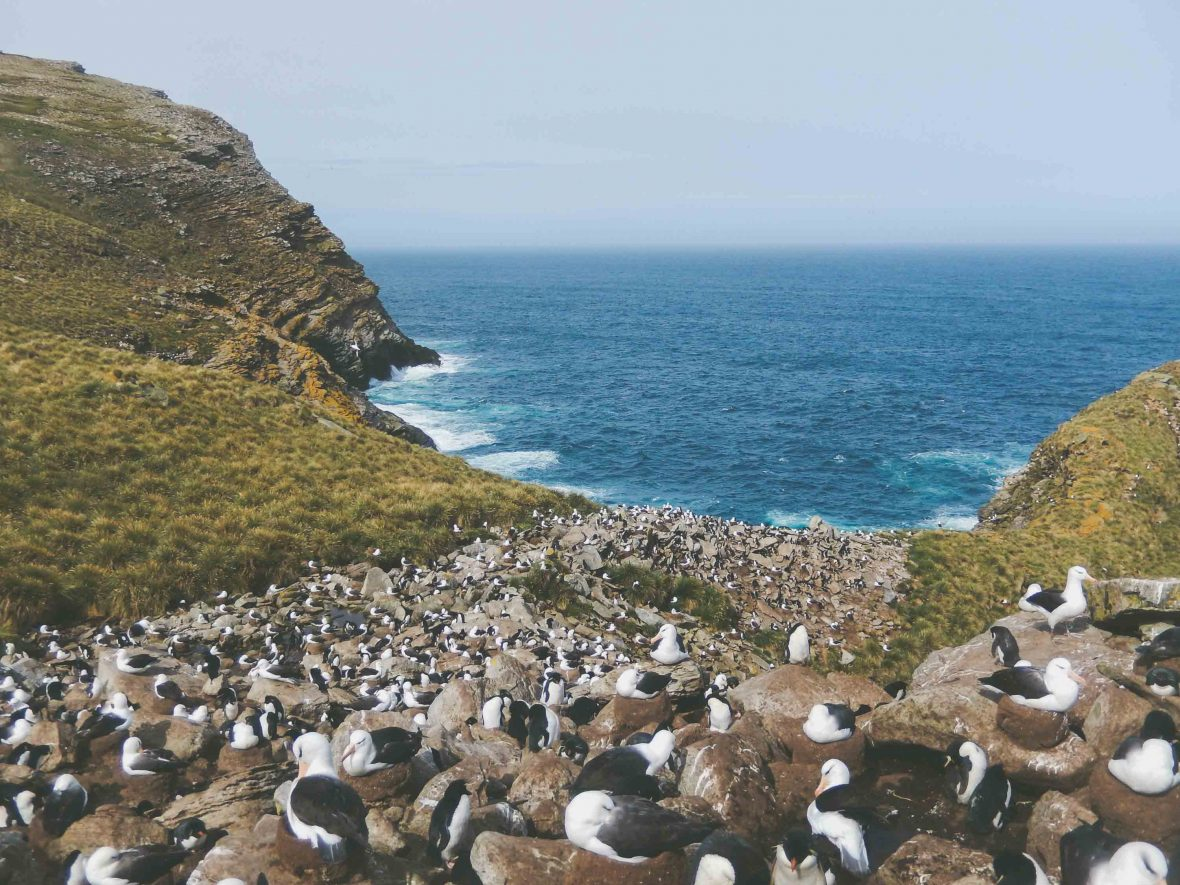
We make our way through the tall tussock grass and find that we can get so close to the bird that we can almost touch them. Our guide tells us that as long as there is some grass between us and the birds they will ignore us. But if we attempt to step out of the grass and on to the rocks all hell will break lose.
The nests are made of tall mounds of mud, almost perfectly circular with a hollowed out scoop on top where the chick sits completely unconcerned by our presence.
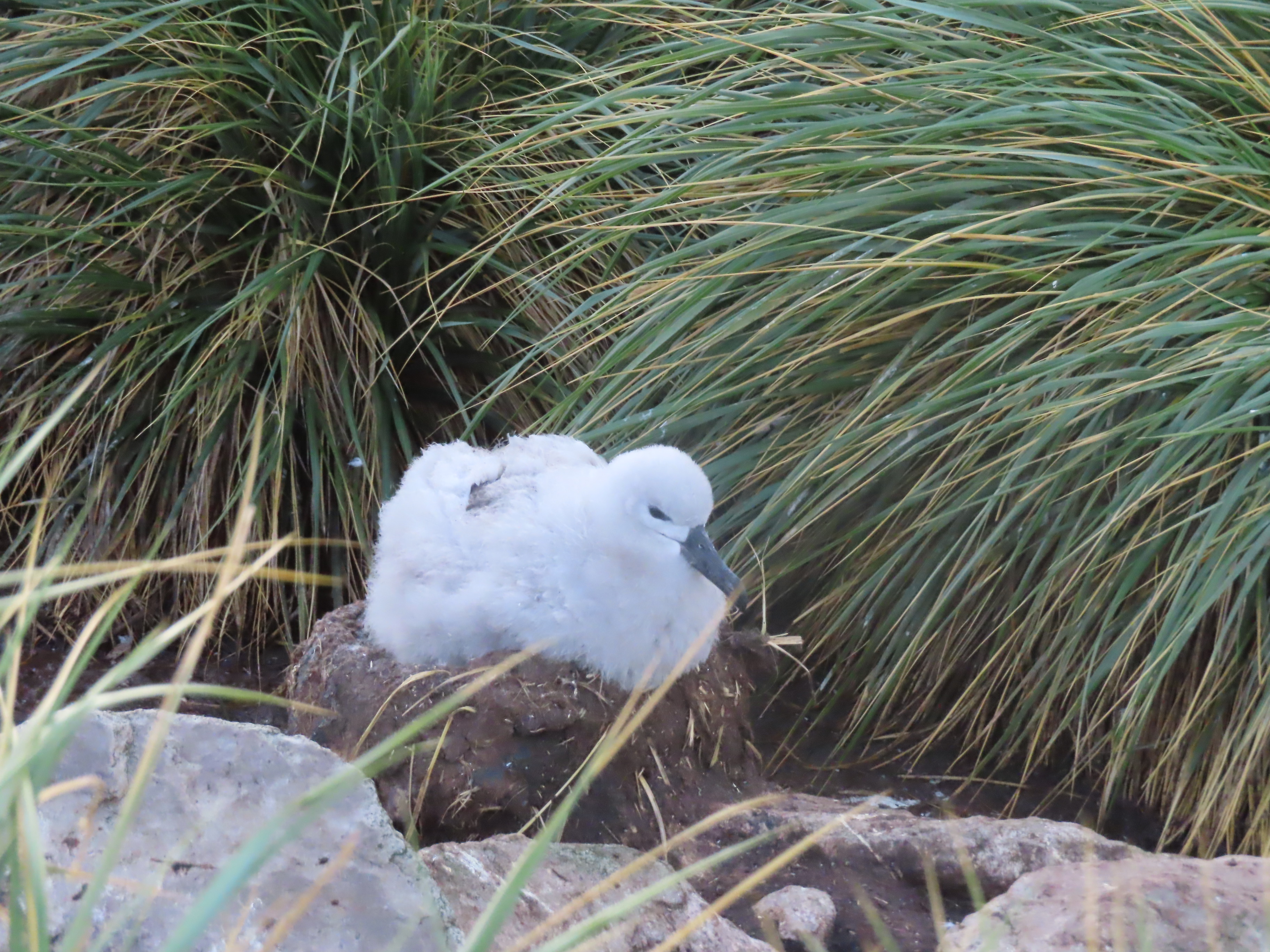
It will be a year before the chick is strong enough to fly and look after itself. During that time it must stay on its nest. If it ventures off the nest the parents will no longer feed it, and it will die.
For the first month, one parent will stay with the chick at all times, but as it grows it demands more food and the parents start staying away for longer periods. At this point the chick will only get fed once every two or three days, but it can be up to 17 days before one of the parents returns. That’s a hell of a long time to wait for your next meal, especially when it is just a load of regurgitated fish oil. Where’s the caviar and champagne!
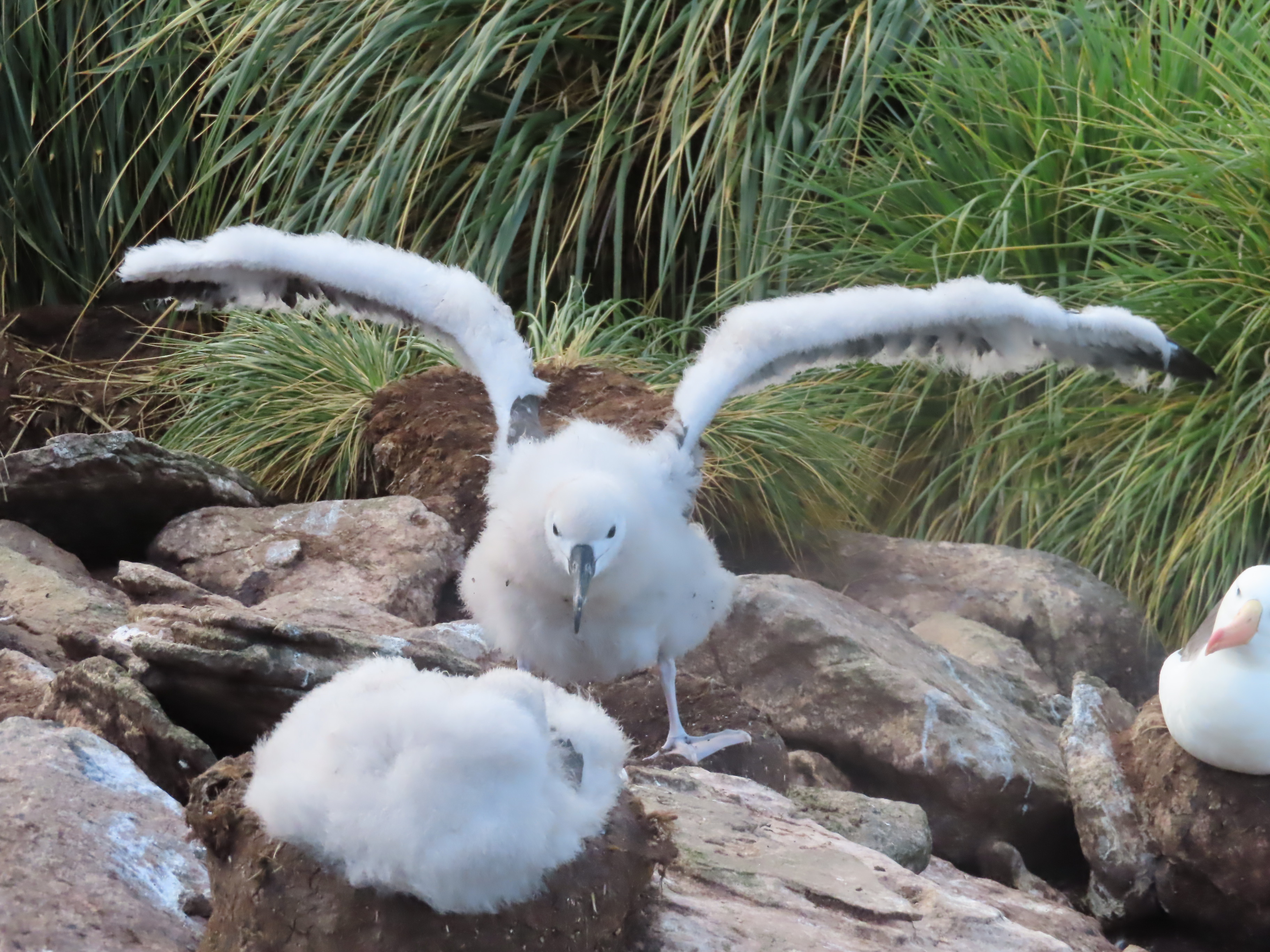
As the chick grows, feathers begin to appear. Now it must learn to exercise and grow its wing muscles. It has to do this rather carefully, making sure it doesn’t fall of its nest
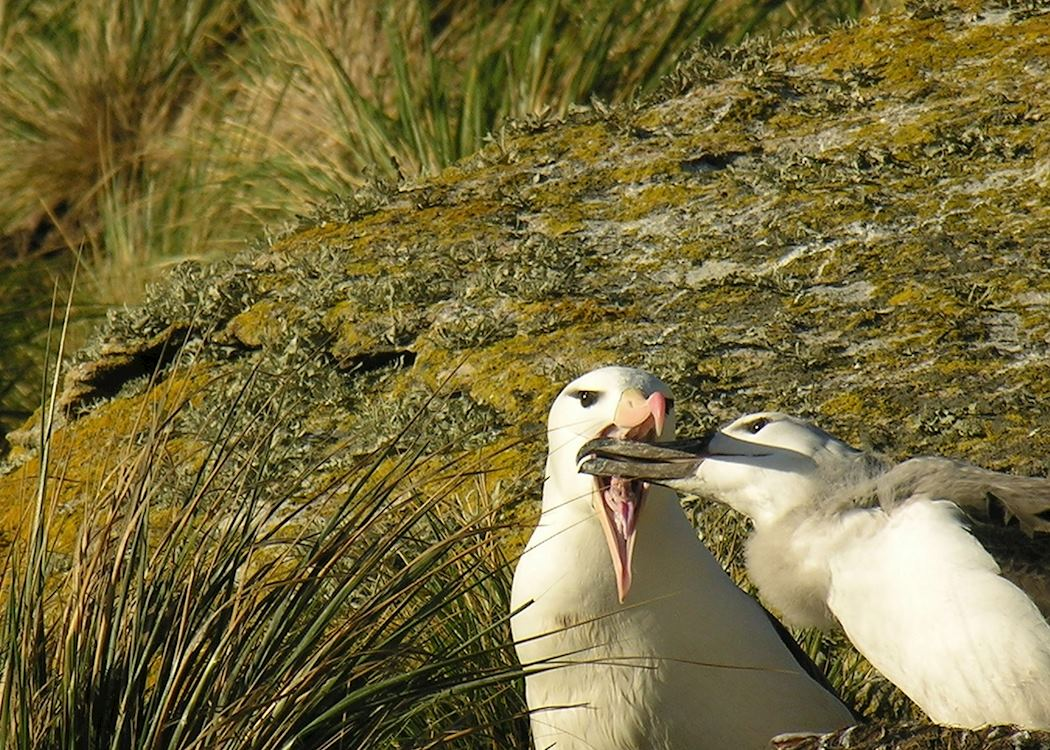
The parents meanwhile take a break from all that hard work and settle on a rock to take a good look at the stupid tourists
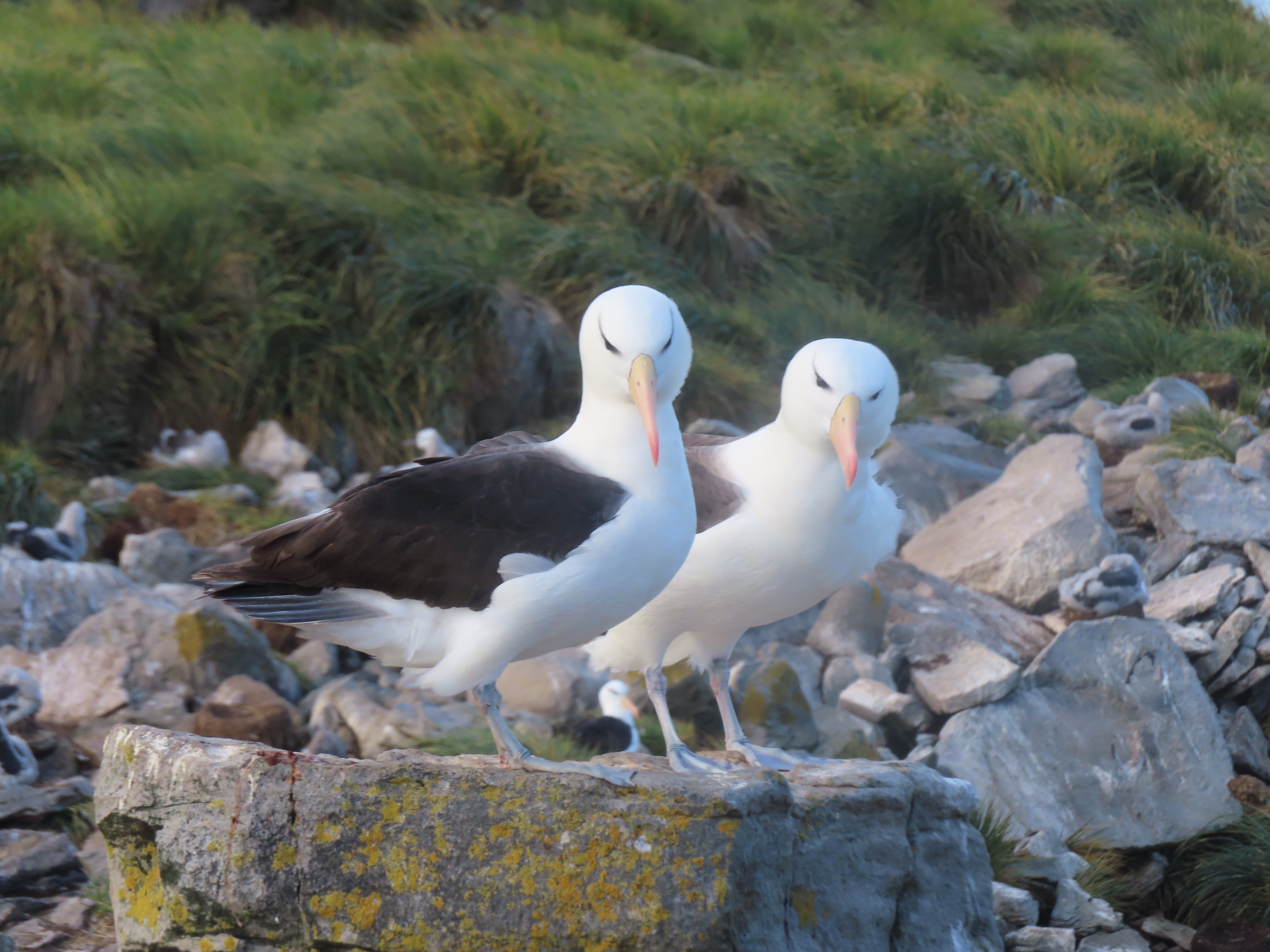
The albatross are not the only birds to find this neighborhood the perfect place to raise their children. They happily share the space with a colony of rock penguins
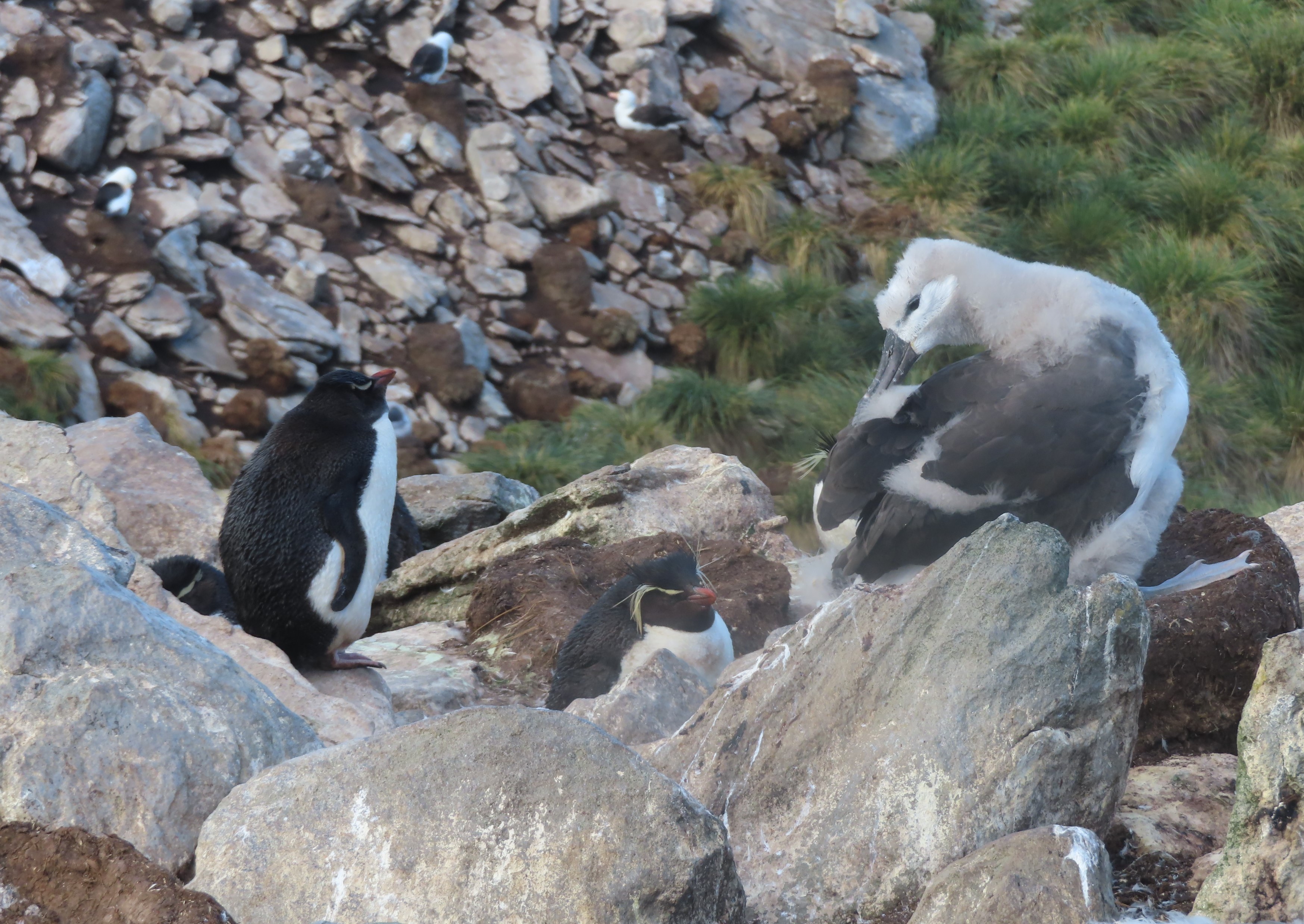
These penguins make the arduous trip up from the ocean and across the rocks with impressive ease where they too feed their young before heading back to the water.
We stand and watch this amazing spectacle for over an hour until an albatross comes into land and gives us a clear sign that it is time for us to leave
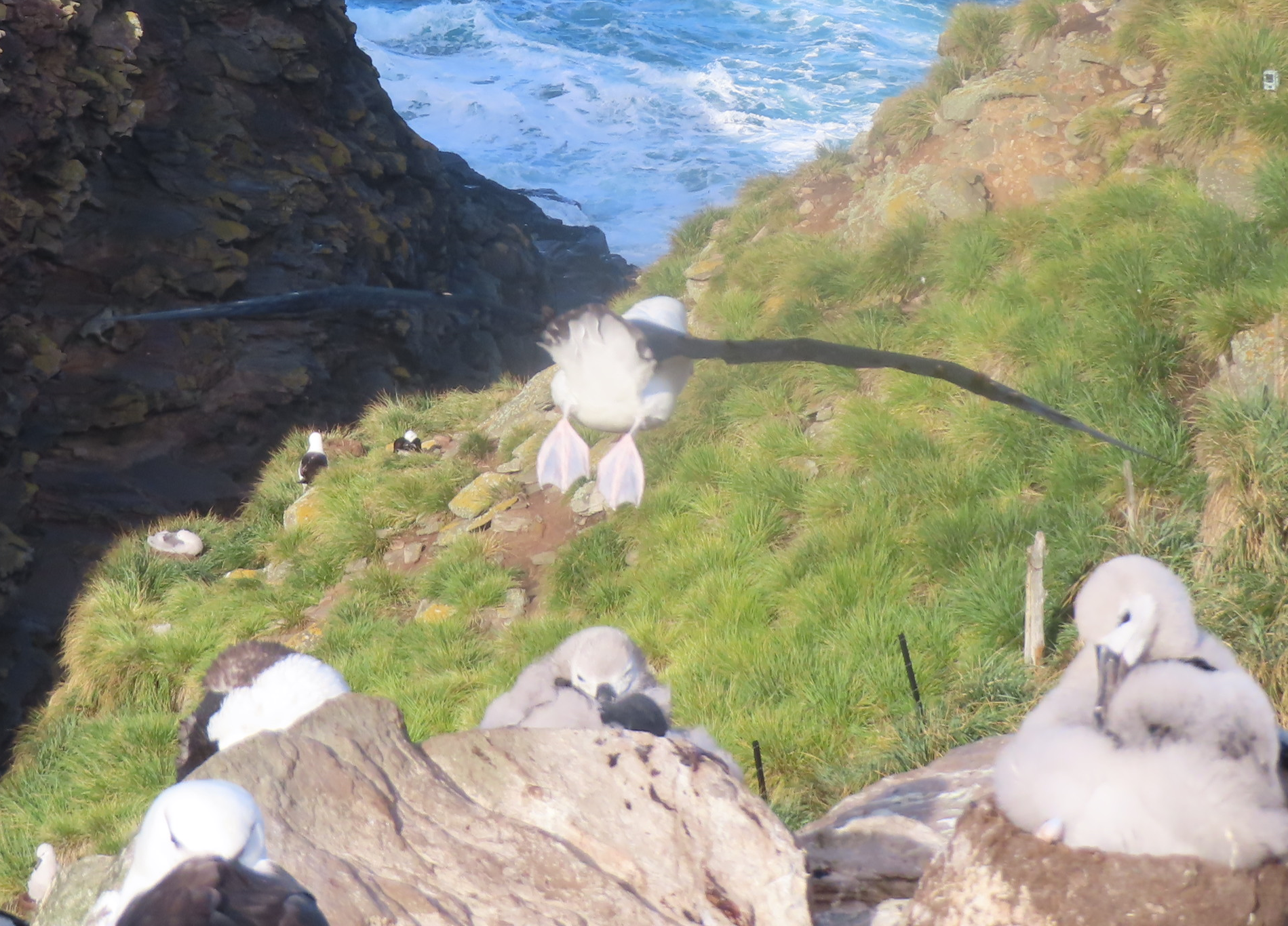
Their version of flipping us the bird.
We take the message, and start the long walk back to ship . It has been a wonderful beginning to our 26 days
 Andrews Fabulous Travel Blog
Amazing! Presumably no natural predators there. West Point makes us think miltary and make sure the Union Jack is flying over our Falkland Islands!
lndeed a very sweet beginning 🙂 xoxo